
You open an app, a website, or a platform and see a small note that a feature has been improved based on customer feedback.
You start using it and notice it right away. Something is simpler. Something makes more sense. Something feels easier than it used to.
It is a small moment, but it stands out because it reflects your experience being heard and reflected back in how something works.
That is the foundation of Human-Centered Design.
Childhood Prosperity Lab (the Lab) believes that children, families, residents, and community partners bring essential expertise to the design of programs, services, resources, and products. Human-Centered Design is the practice that brings that expertise into the center of how solutions are created.
What is Human-Centered Design?
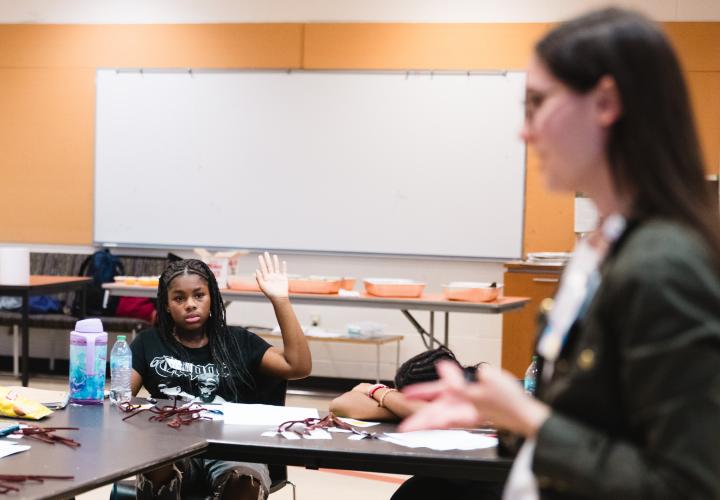
The Lab defines Human-Centered Design (HCD) as an approach that centers the needs, goals, and perspectives of children, families, communities, and other partners in the design, implementation, and evaluation of social innovations. At its core, HCD is a practice, mindset, and culture. It’s an empathy-driven approach that prioritizes lived experiences. Co-design is how Human-Centered Design comes to life. It is the process of working alongside community members and partners to collaboratively shape solutions through dedicated sessions. Through co-design sessions, participants are not just contributors—they are active decision-makers, changemakers, and drivers of positive change.
Human-Centered Design as An Approach:
Team members at the Lab are certified in Human-Centered Design and trained in the 36 methods of the LUMA Framework. These methods are organized into three core categories—observing, understanding, and co-creating. All three categories are grounded in real human experience. Once the topic and goals of a co-design session are set, the Lab team selects methods from the LUMA system to design activities that are interactive, engaging, and focused on meaningful dialogue. Method selection is always intentional, guided by the specific goals and focus of each engagement. For example, the Lab frequently uses Rose, Thorn, Bud, a method within the Understanding category, to explore the strengths (roses), challenges (thorns), and opportunities (buds) in how programs, services, and resources operate within the North Hartford Ascend (Ascend) network. Ascend is a collaborative initiative that connects children and families in the North Hartford Promise Zone with services, resources, and opportunities that support them from prenatal care through career readiness.
Commitment to Collaboration
HCD is about more than the methods used—it's also about how collaboration happens. The Lab is committed to creating spaces where participation is accessible, authentically valued, and sustained. This includes embedding consistent practices into the approach, such as providing meals, offering compensation, connecting participants to care coordination support when possible, and following up to cultivate ongoing engagement. These actions reflect the belief that partnership requires more than input; it requires investment in people.
Why It Matters:
In addition to strengthening trust with residents, communities, and partners, HCD supports:
- Connecting strategies to clear project goals.
- Reviewing information to identify key themes and priorities.
- Turning insights into practical recommendations and next steps.
The Benefits of Applying Human-Centered Design to Community Health:
- Lived experiences inform meaningful action.
- Solutions reflect community needs.
- Community voices build trust and shape decisions.
- Partners and community members share ownership of change.
- Collaboration supports long-term impact.
Human-Centered Design is ultimately a way of working that keeps people’s lived experience present in every stage of decision-making. It helps ensure that programs and services are not only designed well, but are shaped with the people who use and move through them every day.
It is a shift toward designing with people, rather than for people.
Interested in learning more about how HCD can strengthen your community health work? Let’s connect! Email childhoodprosperitylab [at] connecticutchildrens.org (childhoodprosperitylab[at]connecticutchildrens[dot]org)