Innovative ideas that improve children’s health often begin with people who see an opportunity and imagine a new way forward. Through Connecticut Children’s Childhood Prosperity Lab (the Lab), community changemakers have an opportunity to strengthen and grow those ideas with support from experts across child health, development, and community-based work.
The Lab focuses on advancing social innovations, or creative approaches that address the many factors that influence children’s health and well-being. These ideas are rooted in the strengths of families and communities and are developed alongside the people they aim to support. By connecting changemakers with guidance, resources, and expertise, the Lab helps move promising ideas toward greater impact.
One way the Lab supports this work is through its Mastermind sessions. During these 60-minute consultations, changemakers meet with a multidisciplinary panel of advisors from Connecticut Children’s and the broader community to receive feedback and recommendations that help refine and strengthen their innovations.
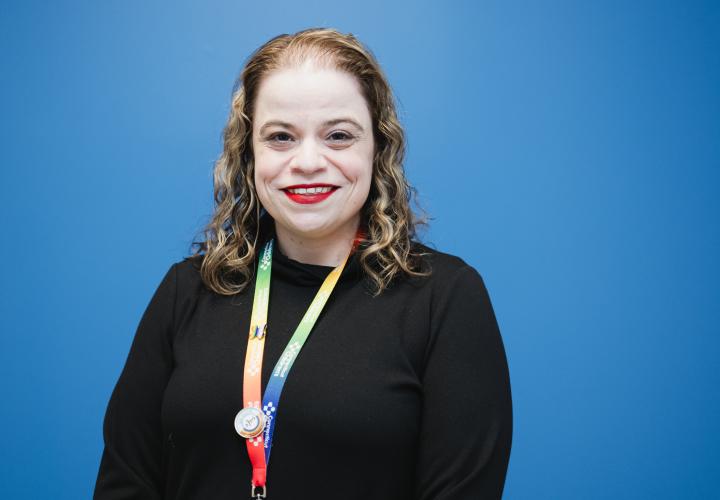
In this advisor spotlight, we’re highlighting Dr. Melissa Santos, Division Head of Pediatric Psychology at Connecticut Children’s. Dr. Santos has participated in six Mastermind sessions, bringing her expertise in pediatric psychology and child well-being to support innovators working to help children and families thrive.
What motivates you to participate in Masterminds as an advisor?
I often think about how we can make the biggest impact on kids’ health, and I often come back to this image of throwing pebbles into the ocean. Every pebble creates a ripple in the ocean. The question I continuously ask myself is: what are the pebbles that will create the biggest ripple effects for children, families, and communities? What are the things we can do today that meaningfully shift the trajectory of a child’s health and positively impact the communities around them?
That is what motivates me about participating in Masterminds. It is an opportunity to sit alongside people who are thinking boldly and creatively about how to improve child health and well-being and who are actively trying to create those ripple effects in their own communities. Sitting in those spaces and conversations are deeply energizing, hopeful, and inspiring and cause me to constantly think about where the next ripple is going to come from.
What expertise, perspective, and experience do you bring to Masterminds?
First and foremost, anyone who knows me knows that I am a complete nerd — and honestly, I think my nerdiness is probably front and center in what I bring to Masterminds. I genuinely love ideas, learning, problem-solving, and thinking creatively about how we improve the lives of children and families. You want me to sit and learn new things - don’t have to twist my arm hard for that!
But all joking aside, I come to this work as a pediatric psychologist, division chief, researcher, and educator whose work consistently sits at the intersection of children’s health, healthcare systems, communities, and the broader societal environments that shape children’s well-being every day. Much of my work has focused on understanding how systems and environments influence health outcomes and how we can partner more effectively with communities to ensure every child has the opportunity to live their fullest and healthiest life.
My background has also given me the opportunity to work across disciplines and alongside people with very different expertise, perspectives, and lived experiences. While I may bring clinical, research, and leadership experience to the table, I try to approach spaces like Masterminds with humility and curiosity. Fancy letters after someone’s name do not make them the most knowledgeable person in the room, and I firmly believe some of the most important expertise comes from lived experience, communities, and the people directly impacted by the work. I think the best ideas and innovations happen when we create space for all of those perspectives to come together.
How does participating in Mastermind sessions align with your professional goals and interests?
At the risk of sounding like an even bigger nerd, Masterminds really sit at the center of the kind of work that makes me happy and genuinely makes me want to get out of bed in the morning. I’ve always been drawn to the spaces where big ideas, community partnerships, science, systems, and creativity all collide. You put those things together and I am all in. Some people hear phrases like “systems change” or “cross-sector collaboration” and immediately want to run in the opposite direction, while I’m over here making color-coded notes and getting excited about the possibilities. Professionally, so much of my work goes back to that idea of the ripple. How do we create healthier systems and communities for children so that we are not just focused on illness, but instead building environments that truly allow kids and families to thrive?
Masterminds provide this incredible opportunity to sit in spaces with other people who are trying to think differently, challenge assumptions, and imagine new possibilities for children’s health and the communities they live in. And honestly, why wouldn’t I love being in spaces where I get to help refine ideas, connect dots, brainstorm solutions, and help people navigate the inevitable hiccups that come along with innovation and systems change work? I usually leave with ten new ideas for my own work, and renewed excitement about what is possible when people come together around improving the lives of kids and families.
What would you like others to know about participating in the Mastermind as an advisor?
First, I would want people to know that participating as an advisor is genuinely fun. Yes, I fully recognize that my definition of “fun” may be different than others — but truly, these sessions are energizing in the best possible way.
I also think it is important for people to know that you do not have to walk into a Mastermind having all the answers. The value is not about being the smartest person in the room or having some magical solution. The value comes from bringing together people with different expertise, perspectives, and lived experiences who are all trying to figure out how to throw better pebbles into the ocean — the ones that create the biggest ripples for kids, families, and communities.
Some of the best moments happen when someone asks a question nobody else thought to ask, makes a connection across completely different fields, or reframes a challenge in a new way. That is where innovation really happens.
And honestly, it goes both ways. While advisors are there to support changemakers, I leave every session learning something new myself. I walk away inspired, hopeful, and usually with at least three new ideas scribbled in the margins of my notes for my own work.