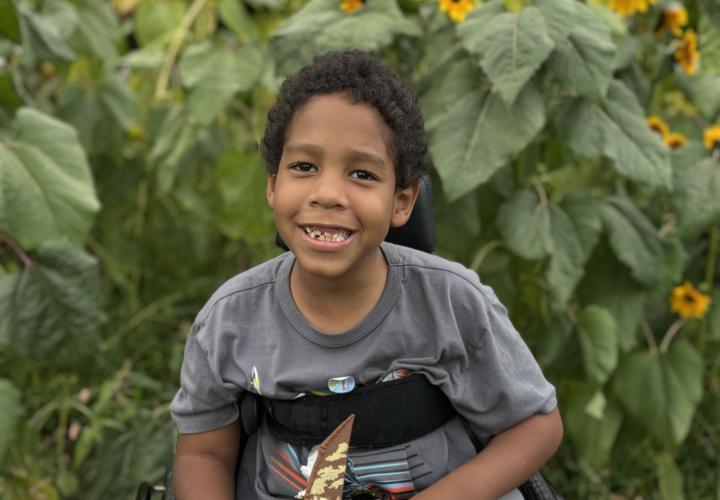
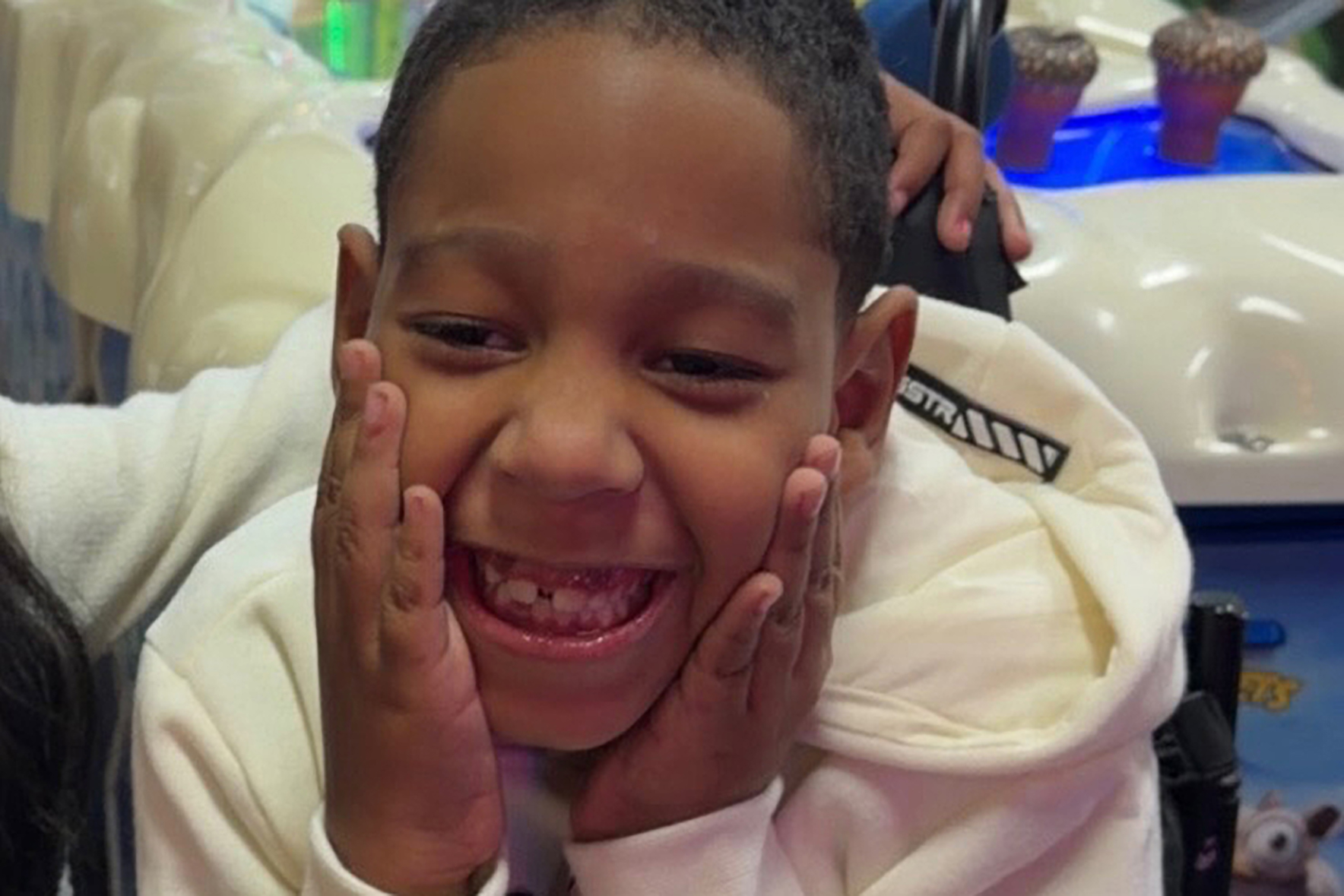
When Adonis, age 7, rolls into the clinic at Connecticut Children’s Hemostasis & Thrombosis Program, something special happens. Every face lights up. Word spreads among the care team. An unofficial receiving line starts to form.

“People come out of the woodwork just to say hello,” says Amanda Zuse, APRN, BC, the program’s associate director.

Adonis has severe hemophilia A, a bleeding disorder that his doctors discovered at birth. His Connecticut Children’s team has been there through every chapter — keeping him safe and seeing him thrive.

“We’ve watched Adonis grow up,” says Amanda. “It’s been a privilege.”


What is hemophilia in kids?

When most kids — and adults — scrape a knee or get a paper cut, their blood quickly clots and the wound stops bleeding. But children with hemophilia A are born without a protein responsible for clotting, meaning even minor injuries can cause dangerous blood loss. Without treatment, bleeding can sometimes begin on its own.

For Adonis, this condition became apparent right at birth, with the routine “heel stick” that hospitals perform as a standard screening for newborns. It’s meant to draw just a tiny drop of blood — done and forgotten in a second. But Adonis’s heel bled for six hours.

The hospital where he was born transferred him to Connecticut Children’s, where a Level 4 NICU could provide the specialized care he needed. There, the team sat down with Adonis’s mom, Michaela, and explained her son’s diagnosis.

“I knew hemophilia was a bleeding disorder, but I didn’t know anything beyond that. I had no idea I was a carrier,” says Michaela. “To hear that my child has hemophilia — and not just regular hemophilia but severe hemophilia — was a shock.”

At the same time, it came with a significant comfort: a team of pediatric experts in hemophilia — including Amanda Zuse. The moment Amanda came on the scene, Michaela felt a sense of reassurance.

“Amanda walked in and she fell in love with Adonis. We’ve been a part of the team since then,” says Michaela. 
 

How do you treat severe hemophilia in kids?

Everyday life, especially for kids, is often filled with bumps, bruises and scrapes. But for someone with untreated hemophilia, such injuries can cause dangerous bleeding. So kids (and adults) with this condition need ongoing medicine, which helps their bodies prevent and control bleeding.

Until recently, that required regular IV infusions — the kind of treatment burden that could define a family’s everyday life. But within the past five years, new medications have transformed treatment, changing what life looks like for children like Adonis.

Instead of sitting for multiple IV infusions each week, Adonis now receives a single preventive shot each week at home. As a result, he has almost no risk of spontaneous bleeding, and a much lower risk of traumatic bleeding from everyday jostles.

“It means mom can send him to school confidently,” Amanda says, “knowing that if he bumps into something or has an accidental fall, it won’t be a life-threatening emergency.”
 

“He brings joy to everyone”

Adonis also lives with cerebral palsy and uses a wheelchair, which reduces some of the physical risks he’ll face as he grows. But he’s still very energetic and curious, and his mom is determined to encourage that.

“I try to let him be as independent as possible,” says Michaela. “He gets down on the floor and crawls around and pulls himself up on things. He gets into trouble.”

Through every milestone (and every time-out), Michaela knows she’s not navigating this alone. Adonis’s Connecticut Children’s care team — including Dr. Laura McKay; Jen Grande, APRN; Cara Burns, RN; social worker Melanie Duclos; and physical therapists Stephanie DePaolo and Rachel Rudewicz — is always just a call or message away.

“Just yesterday, I needed a form for school,” Michaela says. “Before I could even think about it, the team had already sent the updated letter. Ten minutes later, I had another one for his medication. They are amazing.”

And so, of course, is Adonis.

“He’s the type of child who knows what he wants and what he doesn’t want — and he’s very vocal about it,” Michaela says. “He’s been through a lot. But he’s still always smiling.”

“He’s exceeded all our expectations,” says Amanda. “He’s funny. He’s so bright. He brings joy to everyone.”

 

Want more articles like this from pediatric experts you trust?

Sign up for our newsletter.

⭐We Want To Hear From You⭐

Did you have a great experience at Connecticut Children's? Tell us about it. By leaving a review, you are helping many families who are in need of care.