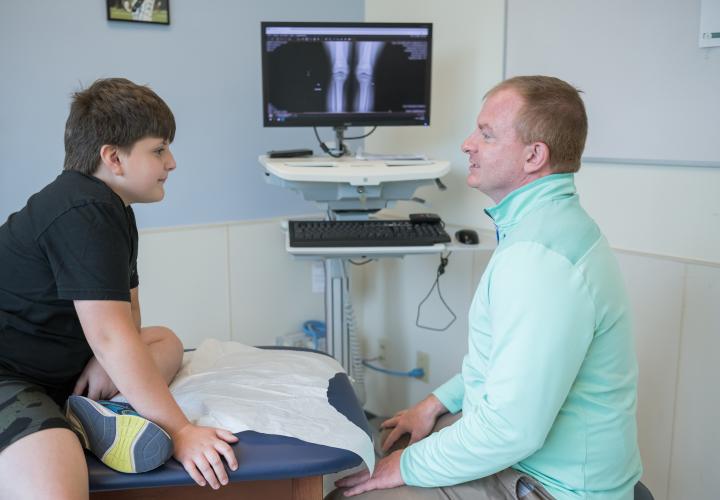
How Is a Meniscus Injury Treated in Kids and Teens?
As a former athlete who has had a meniscus tear, I know a meniscus injury can worry parents. If your child has a knee injury, you may wonder what comes next.
The answer depends on the injury. Some meniscus injuries need surgery while others do not. But the meniscus is treated differently when you are young as opposed to a relying on physical therapy (no surgery) or meniscectomy (partial meniscus removal) for older patients.
The meniscus is a C shaped piece of tissue with a triangular cross section. There is a larger one of the medial (inside) and a smaller one on the lateral (outside) of your knee. It is supposed to protect your cartilage by bearing most of the weight borne between your thigh and your shin bones.
Young athletes can injure the meniscus when the knee twists during sports like soccer, basketball, and football. A torn meniscus can also happen along with other knee injuries.
Because the meniscus protects the cartilage in the knee, our team looks to preserve the meniscus in addition to helping our athletes get back to sports. We also think about long-term joint health.
Does Every Meniscus Injury Need Surgery?
No. That is one of the most important things for parents to know.
Treatment depends on:
where the tear is
what kind of tear it is
how severe the injury is
your child's symptoms
how functional the knee is
Sometimes certain meniscus injuries can heal without surgery through activity changes and physical therapy to build strength, motion, and function.
Other injuries need surgery, especially if they will not heal on their own or if they block normal knee movement. A torn meniscus is not treated the same as a broken wrist, so the plan depends on the exact injury.
Why Is Treating a Child's Meniscus Different?
Kids and teens are not just small adults. Their bones and joints are still growing, so we must think about what this injury could mean for the knee years from now.
When possible, we try to save as much healthy meniscus tissue as we can because research shows that removing meniscus tissue can lead to premature arthritis. That matters for a young athlete with many active years ahead, and as pediatric sports medicine specialists we focus on “saving the meniscus.”
Repairing a meniscus tear can save a child a lifetime of progressive knee dysfunction, and they are better able to heal than adults with the same injury. Our surgeons are at the forefront of meniscal preservation and repair.
This is why pediatric care matters. We look at the injury and at your child's growth and joint health.
When Can My Child Return to Sports?
There is no one timeline for every meniscus injury. Recovery depends on the exact injury and whether care uses rehab alone or surgery.
Instead of counting weeks alone, we watch how the knee heals.
Your child's care team will help decide when it is safe to return to sports and other physical activity.
Athletes who have surgery need to limit putting weight on the area for up to six weeks depending on the tear type.
Based on the injury, it might take up to six months to return to full sports and other activities.
When possible, we try to save as much healthy meniscus tissue as we can because research shows that removing meniscus tissue can lead to premature arthritis. That matters for a young athlete with many active years ahead, and as pediatric sports medicine specialists we focus on 'saving the meniscus.'
Matt Brown, MD, Orthopedic and Sports Medicine Surgeon,
Connecticut Children's
What Should Parents Take Away?
A meniscus injury does not always need surgery, and it does not mean the end of a sports season. But it does need the right exam and care plan.
If your child has knee pain after a sports injury, a specialist can help with swelling or mobility issues.
Want more articles like this from pediatric experts you trust?