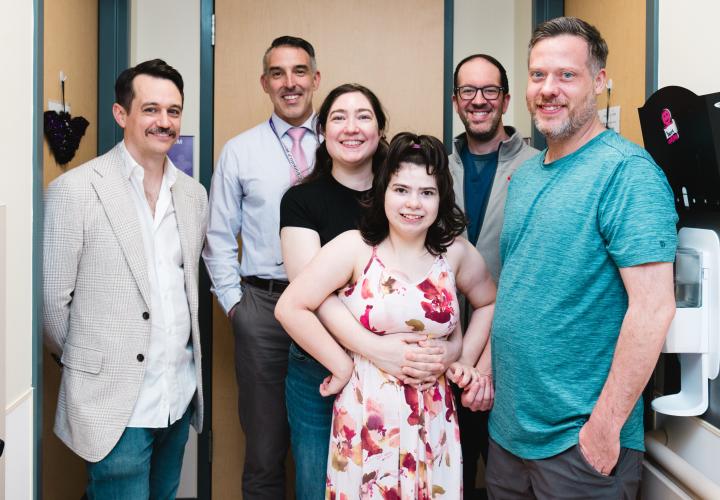
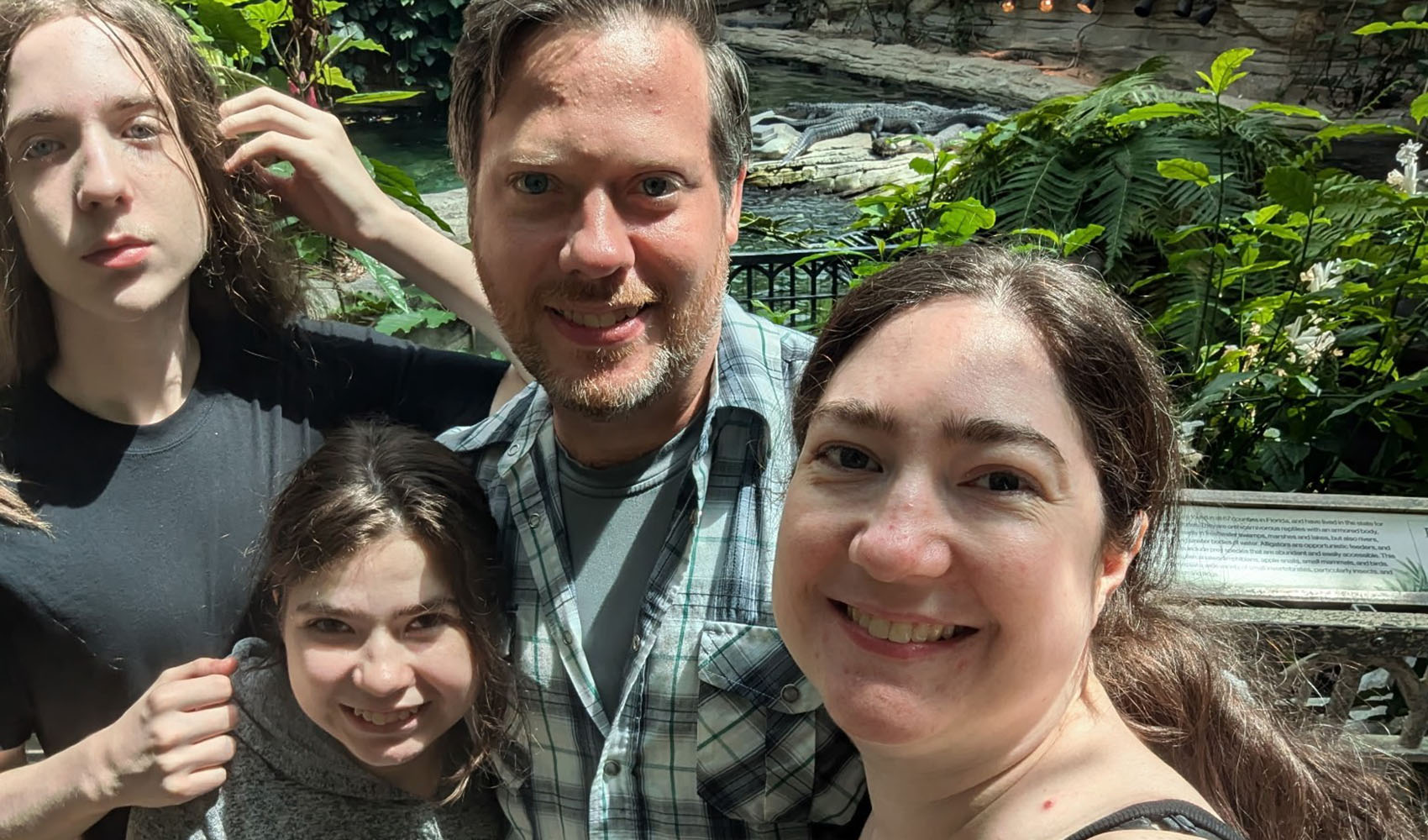
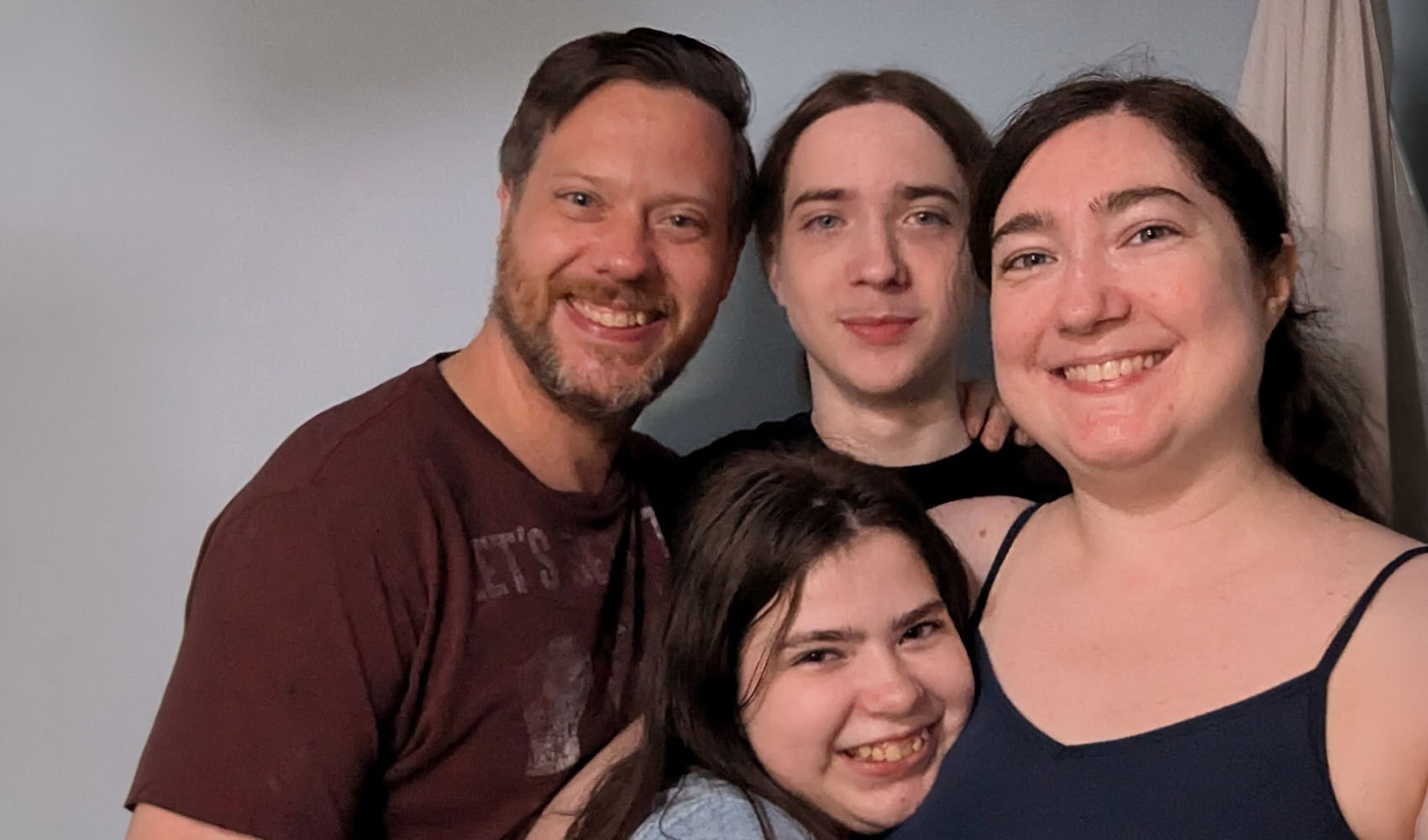
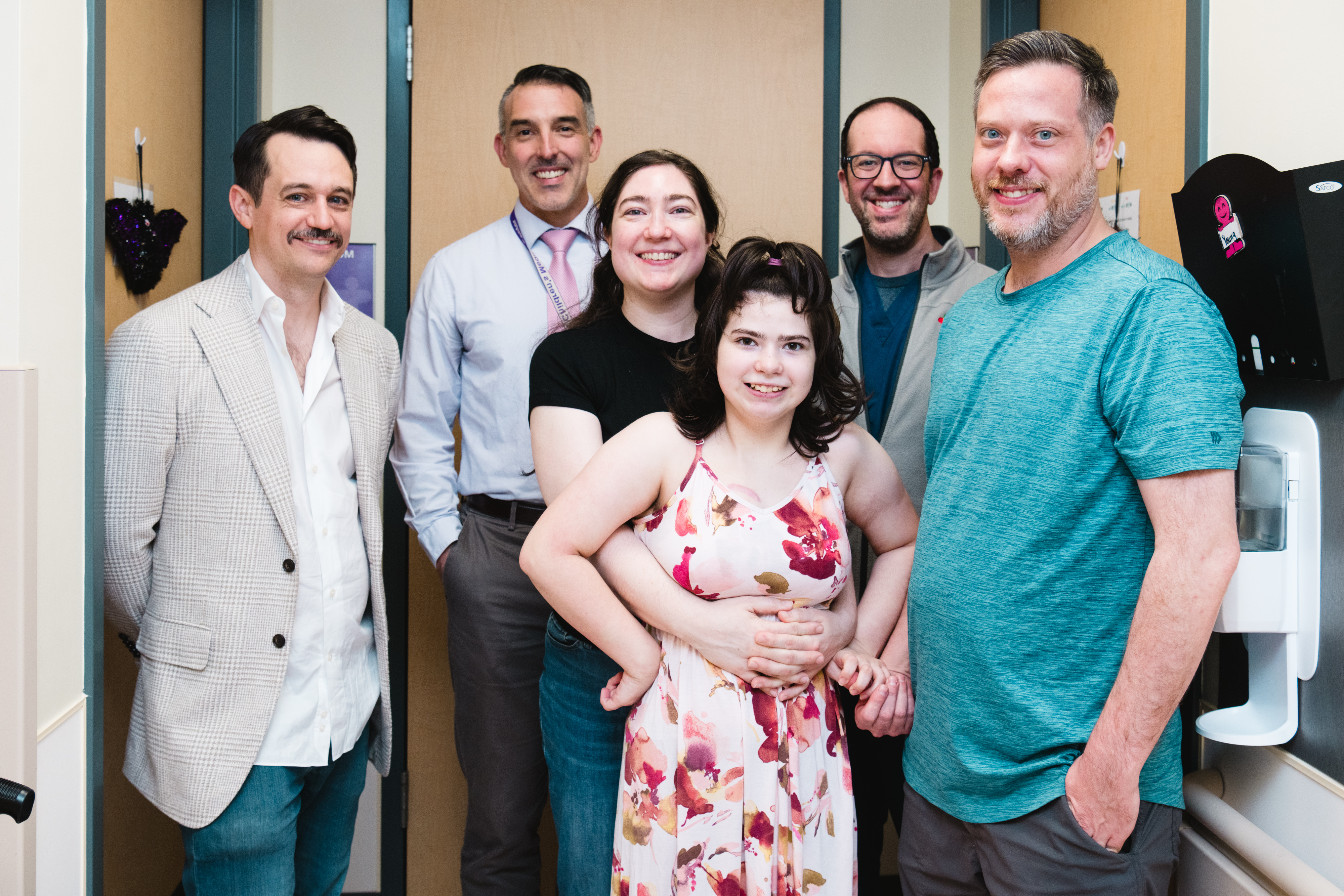
At 15 years old, Marie has big plans for her future.

She loves to paint, both on canvas and digitally. She enjoys nail art and dreams of becoming an artist or nail technician someday. At school, her friendly personality has earned her a special nickname.

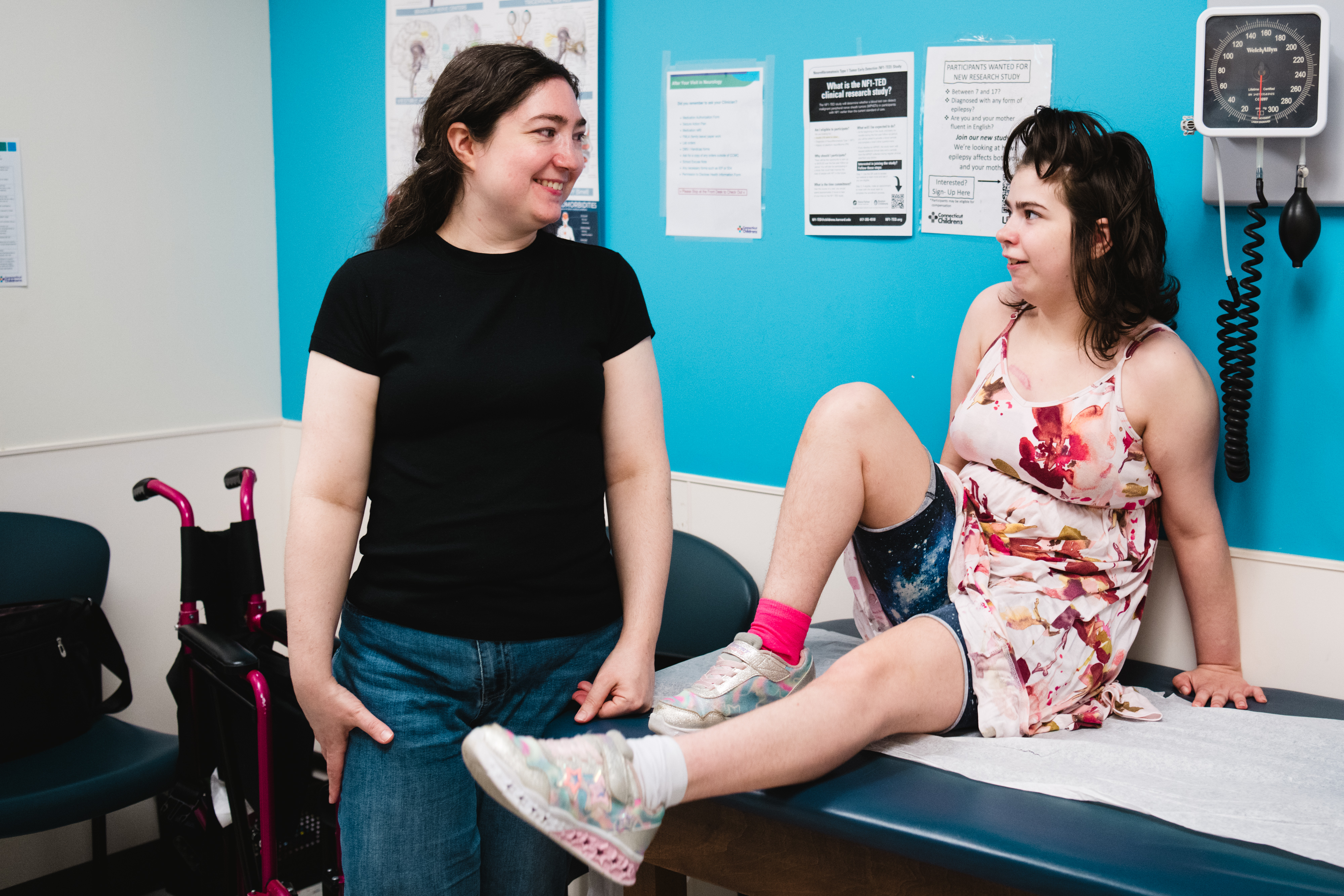
“Everyone calls her a ray of sunshine,” said her mom, Kelly.

Marie also has dystonia, a movement disorder that causes muscles to tighten or move in ways a person can't control. Over the years, dystonia has made it harder for Marie to walk, move her arms and speak clearly.

But a treatment called deep brain stimulation, or DBS, is helping Marie have more control over some of those movements—and do more on her own.
 

A Long Journey to Answers

Marie first came to Connecticut Children’s as a baby because she was having trouble gaining weight. Tests did not uncover a clear cause.

It wasn't until kindergarten that her family began noticing something different about the way she moved.

At first, Kelly remembers thinking Marie's unusual way of running was simply part of her personality. Then Marie's teacher noticed that she was having trouble with her balance and falling at school.

“That was when we realized it was something more,” Kelly said.

Marie began seeing specialists at Connecticut Children’s. At first, her symptoms mostly affected her legs. Her muscles were tight, she dragged her feet and she wore leg braces for a time.

Doctors continued looking for answers as Marie grew. Eventually, genetic testing found a change in a gene called KMT2B, leading to a diagnosis of primary dystonia. “Primary” means that the dystonia is genetic or has no known cause, rather than being the result of another medical condition, medication or brain injury. 

Marie began receiving care from William Yorns, DO, a neurologist at Connecticut Children’s who specializes in movement disorders.

How do genetic disorders affect movement?

Many genes, like KMT2B, play an important role in how the brain develops and functions. Certain changes in this gene can affect the brain’s ability to control movement, leading to a rare genetic condition called KMT2B-related dystonia. In Marie’s case, this led to twisting movements, unusual body positions, stiffness, tremor, or difficulty controlling movement. These symptoms can spread or become more noticeable over time.

Dr. Yorns shared, “Knowing Marie’s diagnosis provides us with a better roadmap for her care. It helps us anticipate potential problems rather than simply reacting to them, and it helps guide treatment decisions.”

As Marie got older, dystonia began affecting more of her body. The tightness and movements spread from her legs to her arms and also affected her speech. By middle school, she began using a walker and later a power wheelchair.

Through it all, Marie kept going to school, making friends and creating art.

 

A New Option for Marie

Dr. Yorns and Marie's care team tried different ways to manage her symptoms, including medication and Botox injections. But the benefits were limited.

Around the same time, Connecticut Children’s pediatric neurosurgeon David Hersh, MD and UConn Health neurosurgeon Christopher Conner, MD were working together to bring deep brain stimulation (DBS) to pediatric patients at Connecticut Children’s. 

After seeing the treatment used for children with epilepsy, Dr. Yorns and the team began discussing whether DBS could also be an option for Marie.

For some patients with KMT2B-related dystonia, DBS can significantly improve movement and function. Knowing Marie's diagnosis helped the team determine that this was an important treatment option to consider.

Marie would become Connecticut Children’s first patient to receive DBS for dystonia.

She was interested from the beginning.

Marie and her family met with Dr. Hersh and Dr. Conner to learn more about what DBS would involve. Dr. Conner specializes in functional neurosurgery, including DBS. He’s the surgical version of an electrician

“For DBS, we place thin wires called electrodes in parts of the brain involved in movement,” Dr. Conner explained. “The electrodes connect to a small device placed under the skin in the chest. This device sends carefully controlled electrical impulses to the brain to help regulate the brain signals that control movement.”

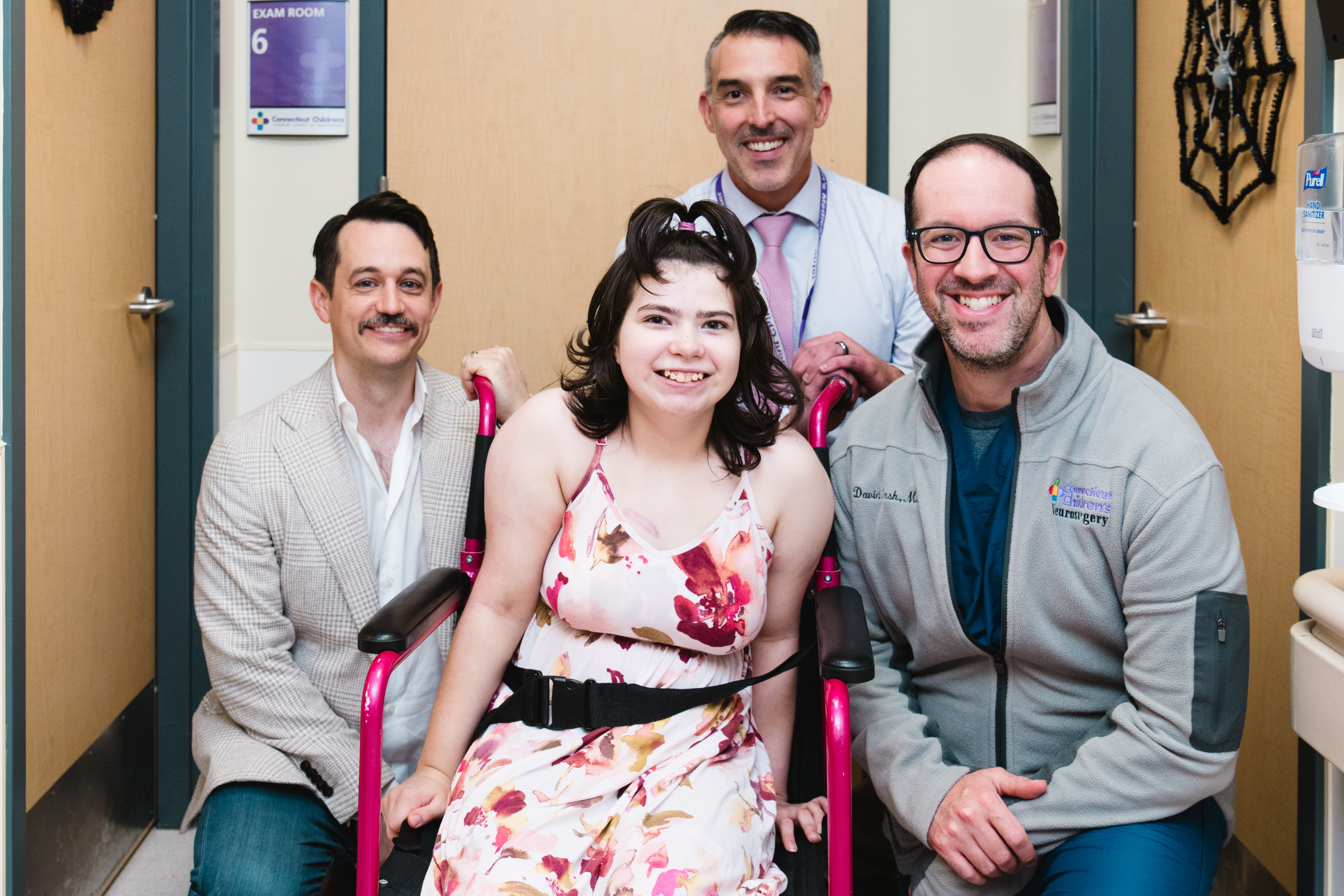
The two surgeons work together on each DBS procedure, combining Dr. Conner's specialized experience with DBS with Dr. Hersh’s pediatric neurosurgical expertise. 

“We've built a joint program where patients can have the pediatric expertise associated with being in a children's healthcare system and stay with their primary neurology team,” said Dr. Hersh. “At the same time, we bring in the expertise of a neurosurgeon specifically trained in deep brain stimulation.”

For Marie's procedure, the team carefully placed two electrodes, one on each side of the brain, in an area involved in controlling movement called the globus pallidus interna. Marie was asleep throughout the surgery, and went home the next day.
 

quote icon

DBS isn’t a one-time treatment where we do the surgery and then walk away. The surgery is really the beginning of a long-term partnership. We continue to work closely with Marie, her family, Neurology and her therapy teams as her stimulation is adjusted and her needs change over time. 

David Hersh, MD, Pediatric Neurosurgeon,
Connecticut Children's

DBS Is a Process, Not Just a Surgery

The surgery was only the beginning.

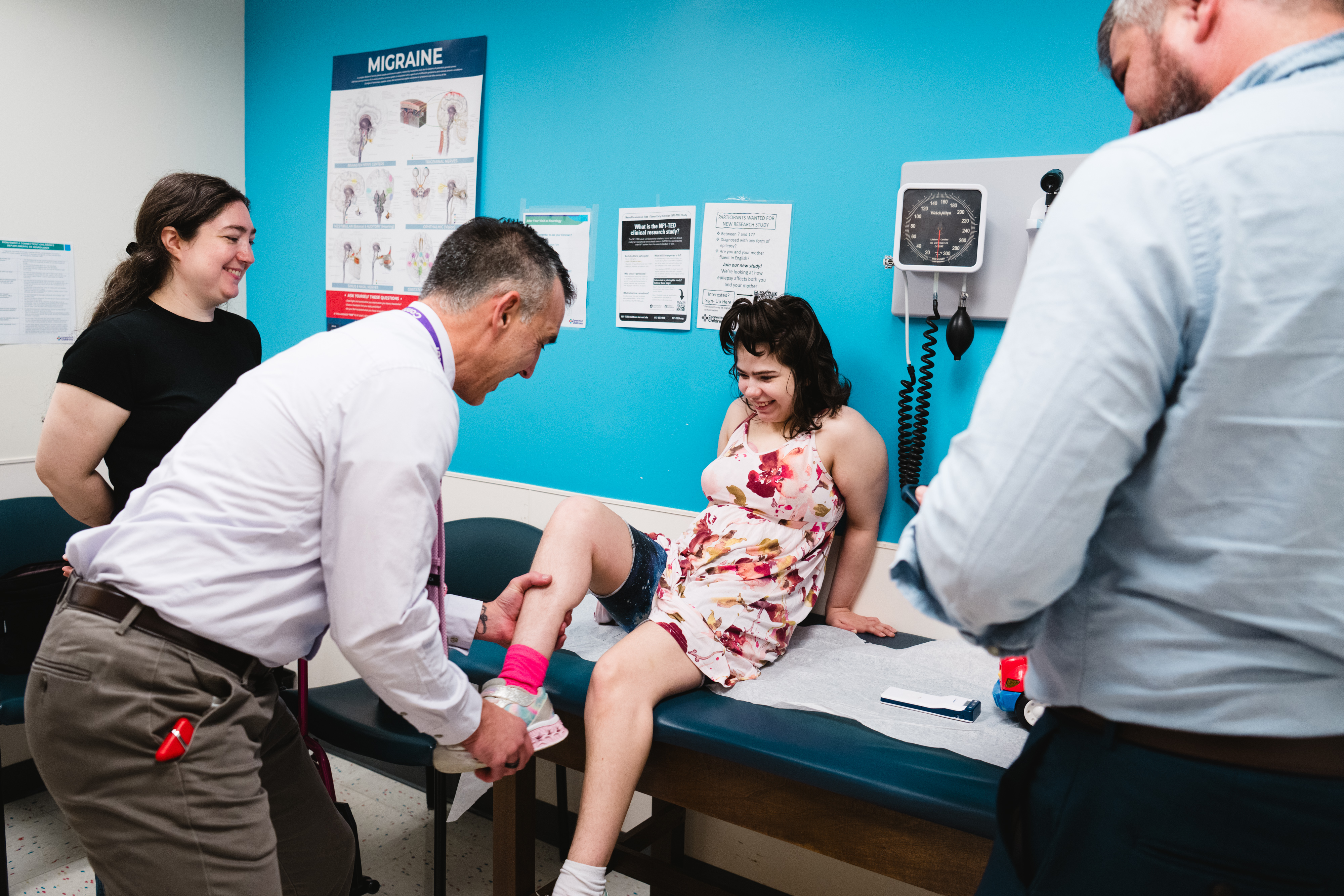
After giving Marie time to heal, her care team turned on the device at a low setting. From there, they gradually adjusted the stimulation to find what worked best for her. This part of the process is painless and done during an office visit. It’s simple: a tablet links wirelessly to the generator to make adjustments. 

Early on, Marie returned frequently for these adjustments. Now, those visits are much farther apart.

“You have to think of electricity like it's your new medication,” said Dr. Conner. “It can take us a little while to really perfect it and get it dialed in. It's not an overnight thing.”
Marie’s care continues to bring together experts from Connecticut Children’s Neurology, Neurosurgery and UConn Health. Together, they decide on changes to her settings to continue to get the best response.   Marie's physical, occupational and speech therapy teams help track her progress.

“DBS isn’t a one-time treatment where we do the surgery and then walk away,” said Dr. Hersh. “The surgery is really the beginning of a long-term partnership. We continue to work closely with Marie, her family, Neurology and her therapy teams as her stimulation is adjusted and her needs change over time.”

Small Changes, Big Difference

DBS isn't a cure for dystonia. The goal is to help improve movement, independence and quality of life. Dr. Yorns reassures, “Our goal is not simply to treat abnormal movements, but to preserve Marie’s comfort, mobility, communication, independence and participation.”

For Kelly, some of those changes have been easy to see.

Marie has less shaking in her arm. As her DBS settings have been adjusted, her muscles have become less tight, making some movements easier.

One change stands out: Marie can now use her arm to pick up a cup and drink on her own.

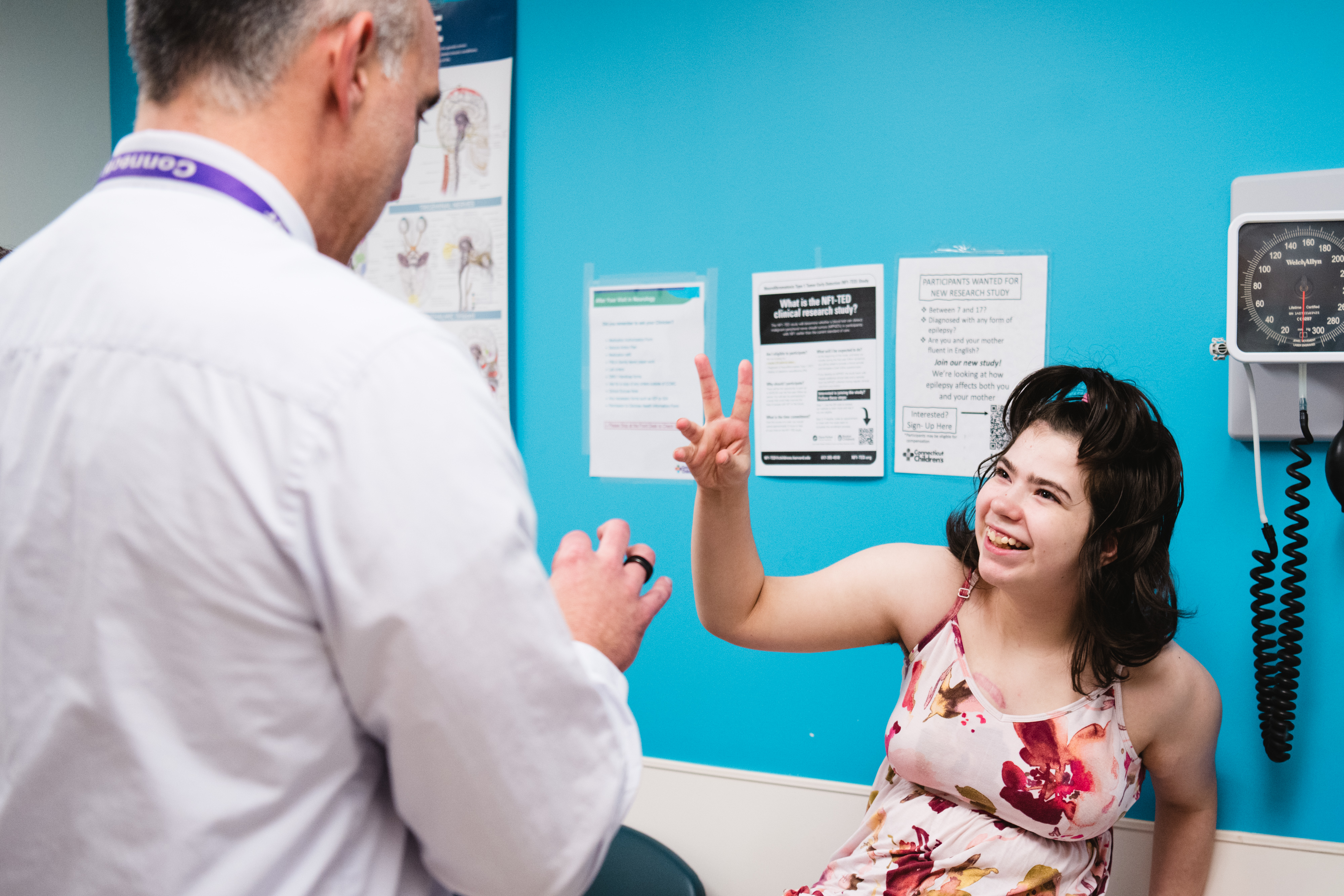
DBS hasn't made every symptom disappear. But Dr. Hersh says her progress over the first year has been encouraging. “One of the strengths of DBS is that we can continue to fine-tune the stimulation over time based on how each patient responds,” said Dr. Hersh. “With Marie, we’ve been able to make adjustments that have gradually improved her movement on both sides of her body.”

For Marie and her family, those improvements matter.

“We're really happy with our decision,” Kelly said. “No regrets. Marie is happy too.”

And Marie is looking ahead. At her paintings, nail designs and a whole cast of characters to meet along the way.