Why Is Newborn Screening Important?
Early identification gives families and healthcare providers the opportunity to take timely action when a condition is detected.
Since the Network began in 2019, it has referred 3,384 babies for specialty evaluation, with 992 ultimately receiving a diagnosis. Nearly 600 diagnosed children are receiving long-term follow-up at Connecticut Children’s, and another 395 are being followed at another Connecticut health system.
These numbers represent real babies and families who have been connected with answers, specialty care and ongoing support.
Children identified through newborn screening have been diagnosed with conditions including congenital hypothyroidism, sickle cell disease, metabolic disorders, congenital adrenal hyperplasia, immune disorders, congenital CMV, Pompe disease and spinal muscular atrophy.
For some conditions, identifying a baby early can allow evaluation, treatment or monitoring to begin before significant symptoms develop.
What Happens If a Newborn Screening Result Is Out-of-Range?
For parents, receiving a call about an out-of-range newborn screening result can bring a lot of questions.
Is my baby sick? What happens next? Who will help us?
An out-of-range (sometimes called positive) newborn screening result does not necessarily mean that a baby has a health condition. Newborn screening is designed to identify babies who may need additional testing or evaluation. Sometimes, a result may be out-of-range even when a baby does not have the condition being screened for.
If your baby has an out-of-range result, your healthcare provider or the Connecticut Newborn Screening Network will help explain what the result means and what needs to happen next.
What Happens After Newborn Screening?
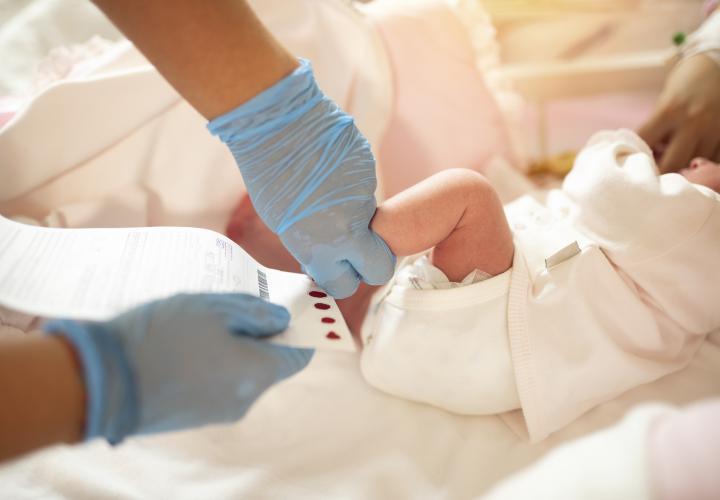
The next step depends on the type of result and the condition being screened for. Your baby may need a repeat newborn screening blood spot, additional testing, or an evaluation by a specialist.
The Connecticut Newborn Screening Network helps families navigate these next steps by coordinating referrals and connecting them with specialists in genetics, endocrinology, hematology, infectious disease, neurology and other areas of pediatric care.
If additional testing confirms a health condition, the appropriate healthcare team will help your family understand the diagnosis and determine what comes next. Depending on the condition, this may include treatment, ongoing monitoring, specialty care or long-term follow-up.
The screening is only the beginning. The goal is to make sure babies who need additional evaluation are connected with the right care, and that families have support along the way.
Newborn Screening in Connecticut
Every year, Connecticut screens approximately 35,000 newborns. Most families will never receive a call about an out-of-range newborn screening result.
But for the families who do, that call can be the first step toward a diagnosis that might otherwise have been delayed and care that can make a lasting difference.
Newborn screening is a small part of those first days with a new baby, but it has an important purpose. It gives families information about their baby’s health, creates an opportunity for early identification and, when needed, helps connect children with the care they need.
For parents and parents-to-be, understanding newborn screening is one more way to learn about the care your baby receives from the very beginning.