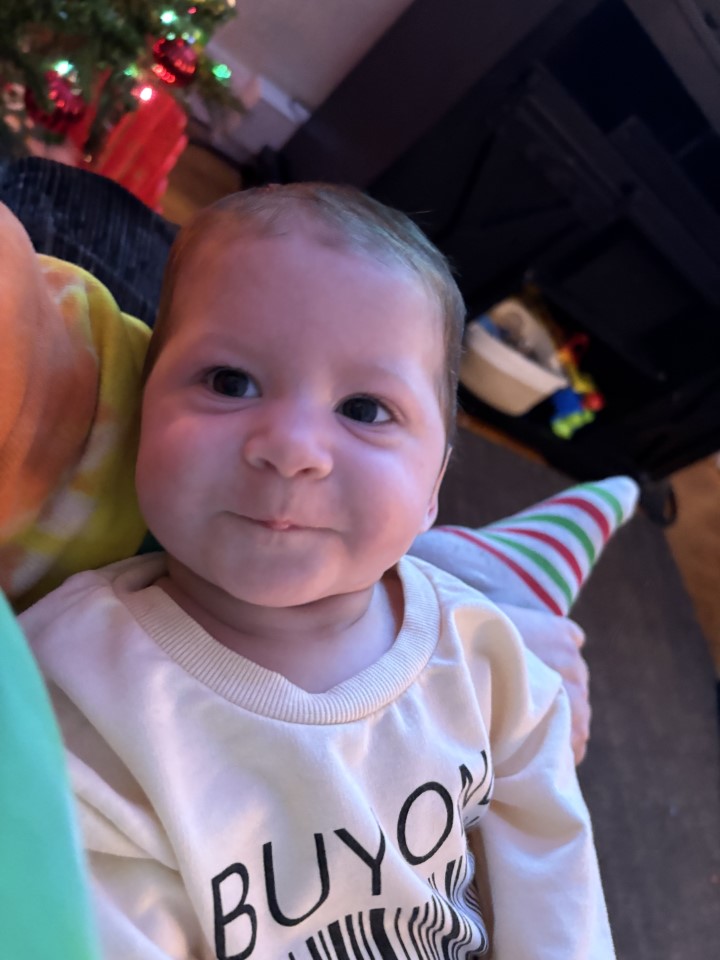
When Felecia and Jacob learned they were expecting twins, everything about the pregnancy felt reassuringly normal.
Felecia was receiving prenatal care close to home and was followed by a maternal-fetal medicine (MFM) specialist, Andrew Mackenzie, MD. Aside from mildly elevated blood pressure and gestational diabetes — both common and manageable conditions during pregnancy — there were no real concerns. The twins were growing well, developing on track, and showing no signs of complications.
Then, around 20 weeks, a routine ultrasound revealed a small mark on one of the babies.
“At the time, I didn’t really understand what it could mean,” Felecia recalls. “I remember crying and laughing at the same time. I joked that at least now we could tell the girls apart.”
After some follow-up scans, Felecia’s MFM referred her to Connecticut Children’s Fetal Care Center in Hartford—the only truly comprehensive fetal care center of its kind in all of New England. There, a team of specialists could take a closer look.
That referral marked the beginning of a very different journey.
Want more articles like this from pediatric experts you trust?
Timothy Crombleholme, MD, Director of the Fetal Care Center, led Sophie’s care during pregnancy, in collaboration with the MFM, that referred her. He emphasizes the importance of that coordination—and with the entire fetal care team.
“Sophie’s diagnosis required close monitoring before birth and careful planning across multiple specialties,” he says. “Our goal was to prepare not only for delivery, but for everything she would need immediately after birth and throughout her NICU journey.”
When Everything Changed at 31 Weeks
At 31 weeks, during a routine ultrasound, the situation suddenly changed.
Sophie showed signs of fluid buildup, known as hydrops, which the team believed was related to her venolymphatic malformation, along with early signs of an imbalance in blood flow between the twins. The twins were also showing signs of twin-twin transfusion syndrome (TTTS), a condition that can occur in identical twins who share a placenta, when blood flow between the babies becomes unbalanced.
The decision was immediate. The twins needed to be delivered. Now.
On July 10, Sophie and Ophelia were born via emergency C-section. Although they shared a birthday, their NICU journeys would look very different.
The fetal team was always very reassuring. It was comforting to be surrounded by people with different specialties who could answer different questions.
Felecia,
Sophie and Ophelia's Mom
Ophelia: Small but Strong
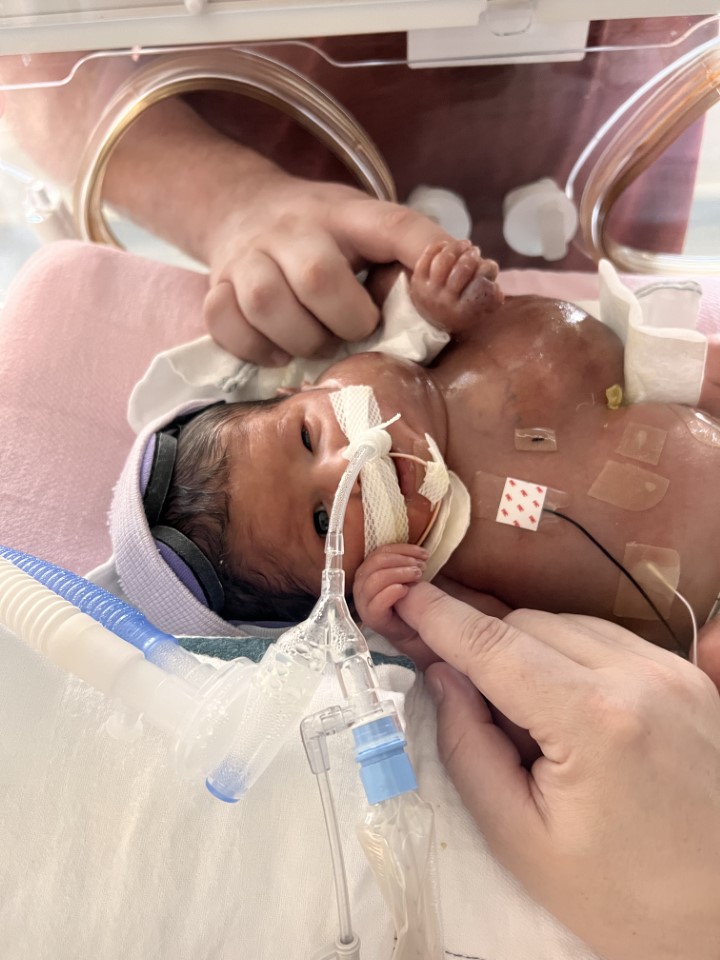
Ophelia, the smaller twin, was born weighing just over three pounds. She spent about one month in the NICU.
Early in her stay, she developed necrotizing enterocolitis (NEC), a serious intestinal condition that can affect premature infants. Because it was detected early, Ophelia responded well to treatment and recovered within just days.
After that, her NICU course was relatively smooth.
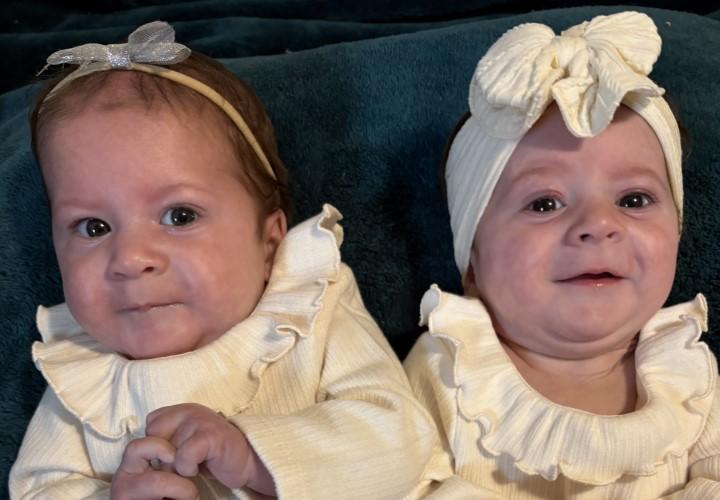
“Ophelia is doing great,” Felecia says. “She’s very emotional, very affectionate — definitely our little princess.”
Today, Ophelia is thriving at home, growing stronger each day and making her personality known.
Sophie: A Long and Complex NICU Stay
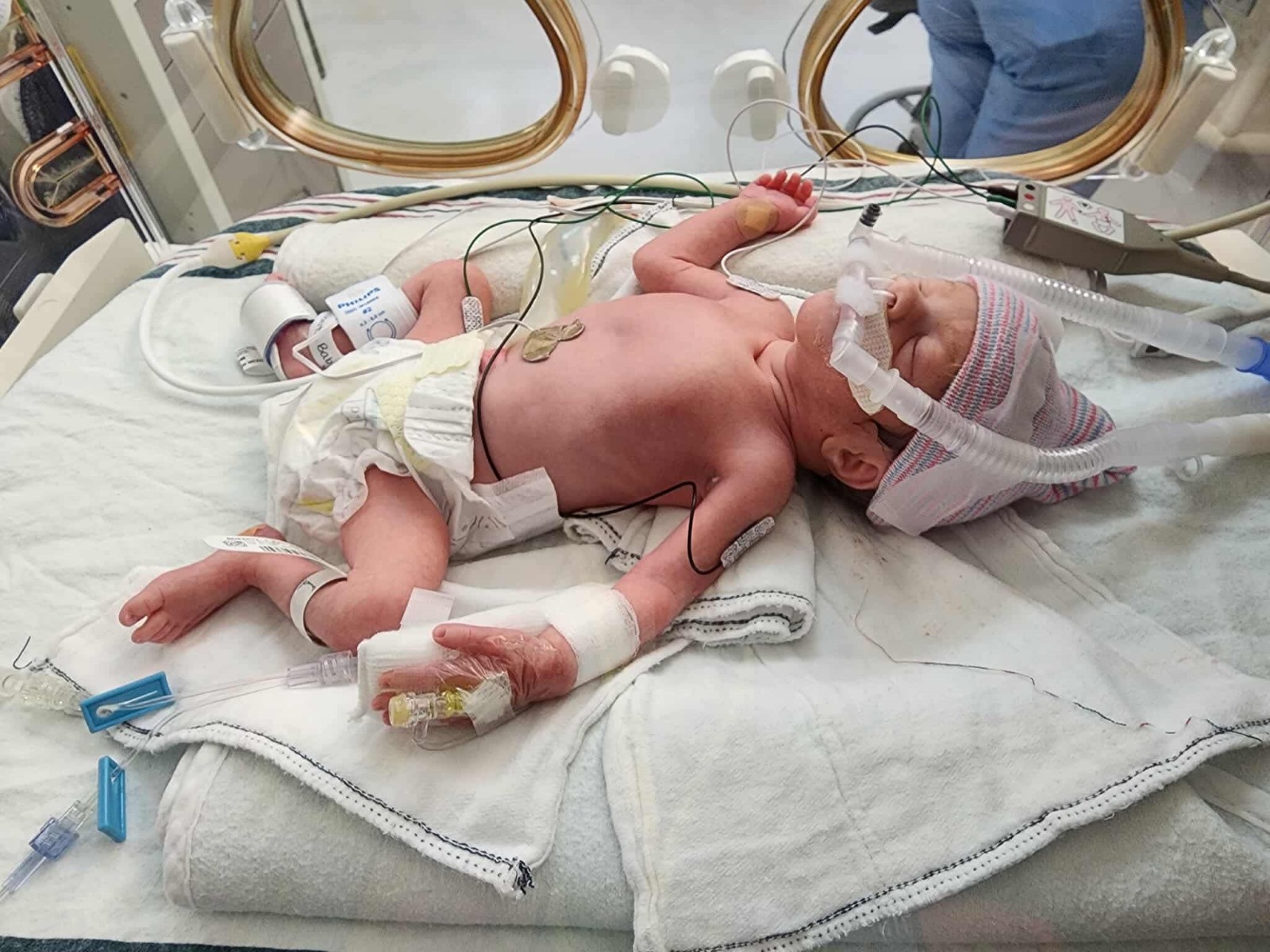
Sophie, who weighed more than six pounds at birth — largely due to the fluid and tissue associated with her venolymphatic malformation — required much more intensive care.
Sophie’s venolymphatic malformation had extended into her neck, where it compressed her airway and made it impossible for her to breathe on her own. She needed long-term ventilator support while the care team worked to reduce the mass safely.
A multidisciplinary team — including neonatology, pediatric surgery, oncology, and rehabilitation specialists — developed a carefully coordinated plan.
Sophie started medication to help shrink the malformation, a treatment she continues today. Christine Finck, MD, Surgeon-in-Chief for the Division of Pediatric Surgery, placed a wound vacuum device, which gently removes fluid and helps reduce pressure. This double effect allows the mass to shrink over time.
Every Monday, Wednesday, and Friday, Sophie returned to the operating room so the wound vacuum could be changed and additional fluid drained.
Dr. Finck, who performed Sophie’s first wound vacuum placement, worked closely with neonatologist DonnaMaria Cortezzo, MD, Neonatal Lead for the Fetal Care Center, to assess Sophie’s readiness for each procedure.
“Venolymphatic malformations can grow quickly and affect critical structures like the airway,” Dr. Finck says. “Sophie’s care required multiple procedures and very precise timing, but her response to treatment was remarkable.”
Once the mass was small enough, surgeons were able to close the area — and Sophie was finally able to come off the ventilator and breathe on her own.
Later, the team addressed a second mass on her side and worked closely with occupational, physical, and speech therapists to help Sophie learn to feed by bottle.
Venolymphatic malformations can grow quickly and affect critical structures like the airway. Sophie’s care required multiple procedures and very precise timing, but her response to treatment was remarkable.
Christine Finck, MD, Surgeon-in-Chief, Division of Pediatric Surgery,
Connecticut Children's
Sophie, at birth, before her series of surgeries with Dr. Finck.
Family-Centered Care, Every Step of the Way
Throughout Sophie’s NICU stay, Felecia and Jacob remained deeply involved in every decision.
Dr. Finck continued to follow Sophie beyond the NICU, while Michael Isakoff, MD, Division Head of the Center for Cancer and Blood Disorders, manages her ongoing medication.
“Dr. Finck has been my main point of contact,” Felecia says. “If she doesn’t know an answer, she tells me she’ll find it — and she always does. She even connected me with another family going through something similar.”
Dr. Cortezzo also reflects on Sophie’s progress.
“Sophie’s NICU course was complex,” she says, “but she was supported every step of the way by a team that adapted her care as her needs evolved. Her progress reflects true multidisciplinary teamwork and a deeply engaged family.”
Life Beyond the NICU
The family lives an hour and a half away from Hartford and made the trip to the NICU every other day when possible, while also caring for their two sons, Jace, 9, and Emmett, 2.
Despite the distance, the NICU staff became like family.
“We’re still in touch with some of the nurses,” Felecia says. “I send pictures to Dr. Cortezzo and Dr. Finck. I even made little ornaments for some of the nursing staff.”
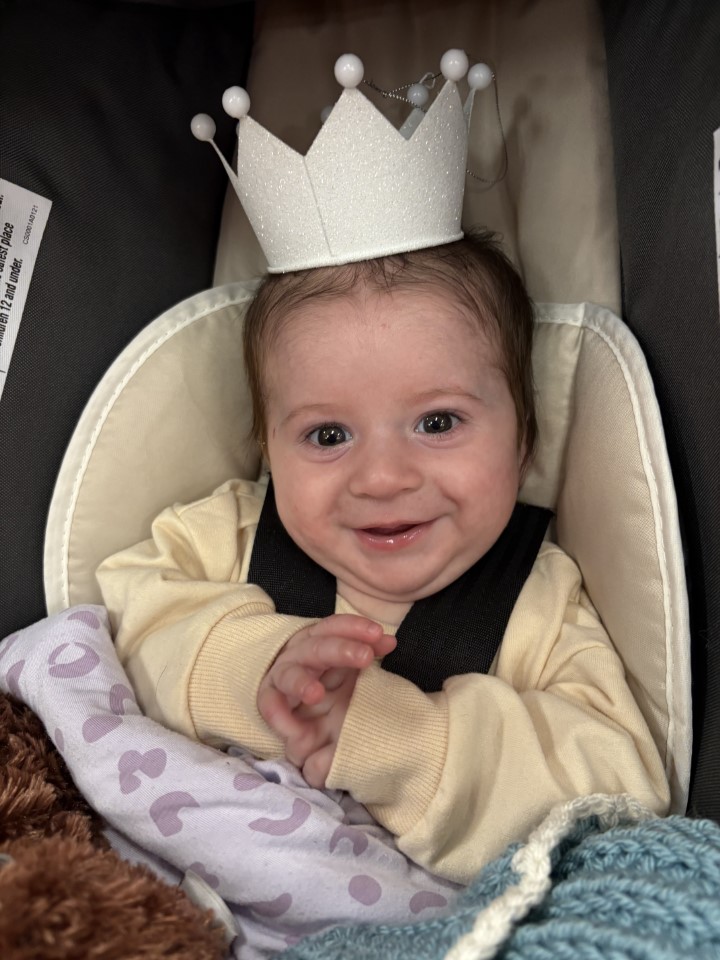
Today, Sophie’s malformation is still visible — “a little lumpy,” Felecia says — and it limits some movement in her arm. But she’s home, growing stronger, and surrounded by siblings who adore her.
Jace loves holding and playing with his sisters. Emmett showers them with kisses and toys he thinks they’ll love. Ophelia tolerates the attention. Sophie laughs through it all.
After everything, that laughter feels like a victory.
Sophie’s NICU course was complex, but... her progress reflects true multidisciplinary teamwork and a deeply engaged family.
DonnaMaria Cortezzo, MD, Neonatal Lead, Fetal Care Center,
Connecticut Children's
⭐We Want To Hear From You⭐
Did you have a great experience at Connecticut Children's? Tell us about it. By leaving a review, you are helping many families who are in need of care.