
Condition
Epignathus & Epulis Congenital Epignathus Congenital epignathus (from the Greek “epi” for “above” and “gnathos” for “jaw”) is an extremely rare form of teratoma (germ cell tumor) that arises from the oropharynx, the middle part of the throat, specifically from the hard palate. It is estimated that Osteomyelitis - Clinical Pathway Acute hematogenous osteomyelitis is a relatively rare condition in children (incidence ranges from 1.2 to 13 per 100,000 children per year), but delayed diagnosis can result in significant morbidity. Successful management requires coordination between multiple subspecialties
Delirium Clinical Pathway Delirium is defined as an acute-onset neuropsychiatric syndrome characterized by disturbances of cognition, attention, consciousness or perception that is potentially life threatening. It is important to recognize that delirium is secondary to an often reversible medical etiology
Specialty
Nephrology From kidney stones to kidney transplants, our board-certified nephrologists at Connecticut Children’s work with social workers, child life specialists and nutritionists to provide diagnosis, treatment and follow-up kidney care to children of all ages. As leaders in pediatric
Brachial Plexus Palsy Management Clinical Pathway Brachial plexus palsies occur in about one in 1000 live births. Older literature quotes over 90% rate of recovery, however “recovery” has a broad definition that includes any reanimation of the limb. Recognizing secondary weakness and deformity, the actual recovery rate is closer
Peripheral Venous Access Clinical Pathway Peripheral venous access is a frequently performed procedure, and the most common source of pain, for children in the hospital. Pain control is a high priority for patients and families and pain experiences can have long term effects on children. The use of topical anesthetics
Article
No Holding Back: Tyler’s Story There’s never a good time for your child to need urgent care. But it’s really, really not a good time when you’re about to leave for vacation. Two days before his family’s big trip to Marco Island, Florida, 7-year-old Tyler Grad fell off a slide at his school playground. He and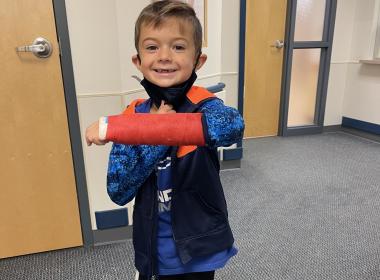
Article
We Are Not the Center of the Universe By Scott Orsey: By: Scott Orsey Change is hard, especially where structure creates imbalance in perspectives, power and impact. When years of good intentions yield underwhelming results for children and families, it is time to question the approach. In this four-part blog series, Scott Orsey

Ovarian Torsion Clinical Pathway Ovarian torsion is the complete or partial rotation of the ovary on its pedicle, leading to ischemia and potential loss of the ovary. Early diagnosis can be challenging as ovarian torsion accounts for only 3% of acute abdominal pain in females, and can mimic other more common
Nasogastric Tube Discharge Home Clinical Pathway Factors that may contribute to extended hospital stays for premature infants include inability to feed fully by mouth and differences in approaches for discharge home with partial nasogastric (NG) feeds across hospital subspecialties. Once discharged, these families may
RAA Submit Thank you page Thank you for your request. Someone will reach out to you to schedule your appointment shortly.
Rhabdomyolysis Clinical Pathway Rhabdomyolysis is a syndrome characterized by the breakdown of skeletal muscle leading to the release of intracellular muscle constituents. The most common etiologies in children are viral illnesses, exercise, and trauma. Muscle pain and muscle weakness are the most common
Article
Does Removing Kids’ Tonsils Help Prevent Strep Throat? By Katherine Kavanagh, MD: Tonsils, the two fleshy masses in back of the throat, are considered “gate-keepers” for screening bacteria and viruses entering the nose and mouth. While they can play a role in the local immune system, on occasion they can become a reservoir for bacteria and cause problems of