
Endocrinology & Diabetes Research Connecticut Children’s endocrinology faculty and fellows are actively involved in a broad scope of research. Center for Rare Bone Disorders Established by Emily Germain-Lee, MD, our Center for Rare Bone Disorders is home to the Albright Center, the first and only center in the
Doctor
Karan Emerick, MD Director, Center for Pediatric Liver Disease | Co-Director, Intestinal Rehabilitation Program
- Specialties
- Gastroenterology
Doctor
Jeffrey Shenberger, MD Division Head, Neonatology | Ross Mayer Endowed Chair for Neonatal Intensive Care
- Specialties
- Neonatology

Article
How to Support a Child's Media Diet By Annika Anderson, MPH: By: Annika Anderson, MPH In a world that is more digitally active than ever before, childcare professionals, physicians and caregivers are toggling widespread beliefs about children’s media use and whether it hinders or promotes development. Adults who facilitate children’s media
Article
Beyond Slipped Capital Femoral Epiphysis: Melina's Story When Melina, at age 10, felt a shooting pain in her leg and suddenly couldn’t put weight on it, her family assumed it would mean physical therapy at worst. They never imagined it would mean emergency surgery so she could play sports, dance, or possibly just walk normally again
Article
How to Talk to Teens About Dating Safely By Preeti Sandhu, PsyD: Everyone, at every age, deserves healthy, positive relationships. For teens who are just starting out, it’s not always easy to know what that means. Dr. Preeti Sandhu, pediatric psychologist, shares ways to help your teen navigate the dating world and be their own advocate for
Article
Improving Global Health Outcomes By Adam Silverman, MD: By: Adam Silverman, MD Connecticut Children’s is committed to providing high quality medical and surgical care to patients living in Connecticut and beyond. However, our organization is also committed to caring for patients and educating providers around the world. We do this
Article
First in Connecticut: Luna’s Story Technology that enables a devastating sports injury to heal itself? At Connecticut Children’s, it’s no longer beyond imagination. Connecticut Children’s recently became the first health system in Connecticut to use the BEAR® Implant to treat a torn anterior cruciate ligament (ACL Doctor
Ian Michelow, MD Division Head, Pediatric Infectious Diseases and Immunology
- Specialties
- Infectious Diseases & Immunology

Audiology Externship At CT Children’s, we are dedicated to providing an exceptional educational experience for audiology students. Our comprehensive externship program is designed to cultivate highly skilled and competent pediatric audiologists through a diverse range of clinical experiences and
Condition
Cardiomyopathy Cardiomyopathy is a disease that weakens and enlarges the heart muscle, making it harder for the heart to pump blood to the rest of the body. It can disrupt the heart’s rhythm, and cause extra fluid to build up around the lungs and body. There are several different types of Sports Medicine Research Sports Medicine specialists pursue research in the incidence, prevention and recovery of athletic injuries. Preventive sports medicine is a relatively new area of health care and we are committed to expanding the field through laboratory, clinical and epidemiological studies. In
Article
Carter’s Story: Empowering Families to Support Kids Ashley Burkman and her husband, Matt Chella, were thrilled to welcome their twin sons Calvin and Carter into the world in May 2019. The pregnancy had been a healthy one for Ashley with no signs of anything abnormal for the babies. However, shortly after the boys’ birth at 38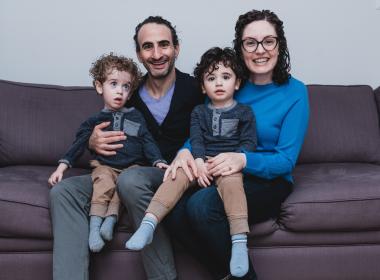
Condition
Fetal Alloimmunization Fetal alloimmunization, previously referred to as isoimmunization, occurs when a pregnant person’s immune system produces antibodies against fetal red blood cell antigens which can attack and destroy the fetal red blood cells (hemolytic anemia). Background Every individual has Peripheral Venous Access Clinical Pathway Peripheral venous access is a frequently performed procedure, and the most common source of pain, for children in the hospital. Pain control is a high priority for patients and families and pain experiences can have long term effects on children. The use of topical anesthetics