
Service/Program
Gastroenterology Nutrition Connecticut Children’s Division of Gastroenterology includes dedicated registered dietitians who specialize in nutrition therapy for infants, children and teenagers affected by conditions of the liver and digestive tract. Our advanced trained registered dietitians evaluate Perinatal HIV Exposure Management (for Breastfeeding and Non-Breastfeeding Newborns) Human immunodeficiency virus (HIV) may be transmitted vertically from mother to newborn. Antiretroviral therapy (ARV) is effective in both preventing and treating HIV in perinatally exposed newborns. National guidelines from the National Institutes of Health and the Centers for
Universal Congenital Cytomegalovirus Newborn Screening Clinical Pathway Congenital CMV (cCMV) occurs in 0.4-2% of live births and is the leading cause of congenital infections worldwide. 1,2 Connecticut is estimated to diagnosis up to 175 cases per year within our state if all infants are screened at birth. cCMV is the leading cause of non-genetic
Article
Bridging Healthcare and Food Insecurity: A Unified Approach By Nancy Trout, MD: With food insecurity on the rise in Connecticut, the Start Childhood Off Right program, part of Connecticut Children's Office for Community Child Health, is dedicated to providing essential support to families in need. Food insecurity—defined as the economic and social condition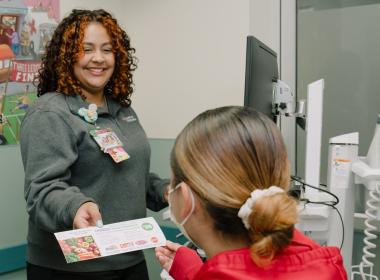
Neurosurgery Programs & Services Conditions & Treatments Our pediatric neurosurgeons specialize in the diagnosis and treatment of brain and spinal cord tumors, craniofacial disorders, cerebral palsy and spasticity, Chiari malformation, hydrocephalus, spinal cord malformations, spinal deformity, vascular
Article
Omicron FAQs: Is the New Variant More of a Risk to Infants and Toddlers? What About Vaccinated Kids? By John R. Schreiber, MD, MPH: This post was last updated January 19, 2022. Right around the time your family was celebrating Thanksgiving, you probably heard news about a new variant in the COVID-19 pandemic. The Omicron variant is now surging around the world, including in the U.S. Scientists are racing to
Article
How to Prepare and Support Children with Autism Spectrum Disorders This School Year By Jennifer Twachtman-Bassett, MS, CCC-SLP: Children with autism spectrum disorder (ASD) have a tough time adjusting to change – so they’ll need additional guidance and support to succeed in school during COVID-19. Connecticut Children’s autism specialist Jennifer Twachtman-Bassett, MS, CCC-SLP shares tips. Create a visual Service/Program
Patching Therapy Patching is a common treatment for amblyopia. Also commonly known as “lazy eye,” amblyopia is a condition in which the eye does not communicate properly with the brain. Children with amblyopia often develop good vision in one eye and poor vision in the other. How Patching Therapy Article
Racial Trauma, Radical Healing, and Hope By Paul Dworkin, MD: By: Paul Dworkin, MD Each year, Connecticut Children’s Office for Community Child Health (OCCH) has the privilege of inviting a speaker to deliver one of the University of Connecticut Department of Pediatrics’ weekly Grand Rounds lectures. The audience for this event includes
Service/Program
Celiac Disease Program Connecticut Children’s Celiac Disease Program is staffed by pediatric gastroenterologists with extensive experience diagnosing and managing celiac disease. Additionally, our team includes dietitians who provide outstanding education and counseling to support children and their Article
Diaper Connections Provides Crucial Support to Families By Luis Rivera: By: Luis Rivera, MSW Diapers are an incredible expense for families and many have a tough time affording the amount needed to keep their children clean and dry. An important new initiative addresses diaper insecurity and Connecticut Children’s is excited to be a partner in it to
Connecticut Adult Congenital Heart Service (CTACH) Clinical Pathway Congenital heart disease (CHD) is the most common birth defect, accounting for ~1% of all live births. 20,000-40,000 children with CHD graduate to adulthood each year. There are over 1.4 million adults with congenital heart disease living in the USA. Adults with CHD have been
Intestinal Failure and Central Venous Catheter (CVC) Patient with Fever Clinical Pathway Patients with Intestinal Failure (IF) often require central venous catheter (CVCs) for extended periods of time used for administration of parenteral nutrition (PN), which is required to maintain adequate growth and hydration. This puts them at a risk of recurrent central-line
Article
White House Conference on Hunger, Nutrition and Health By Nancy Trout, MD: By: Nancy Trout, MD, MPH For the first time in over 50 years, the White House convened a conference of stakeholders with a goal of ending hunger and increasing healthy eating and physical activity in the U.S. by 2030 – the White House Conference on Hunger, Nutrition and Health
Service/Program
Weight Management Programs Our family-based Fit 5 weight management programs are tailored to address the specific needs of families with children of different ages—Fit 5 Tykes (age 3-5), Fit 5 T.E.A.M. Club (age 6-9), and Fit 5 Teens and Tweens (age 10-12 and 13-18). We also provide individualized