
Article
3 Steps to a Safe School Year for Children with Asthma By Jessica Hollenbach, PhD: As summer winds down and we look forward to a new school year, it's crucial to take steps to ensure your child with asthma is prepared for the return to school. One important task to complete in August is to update your child's Asthma Treatment Plan. Why the Asthma Treatment Plan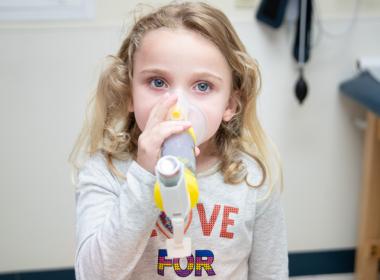
Article
Honoring Black History Month with Children At Connecticut Children’s, we proudly honor Black History Month with our team members, patients and their families. We do so by displaying signage in our hospital, providing educational resources to team members, sharing team member profiles and much more. As a children’s
Medical Records Patients & Families It is the obligation of the hospital to protect the confidentiality of our patients’ medical records. Any information contained in the medical record is confidential and protected by federal and state law. Therefore, patient information will only be released
Article
GROW Thoughtful: Danny’s Story One day, when Danny Sullivan was 8 years old, he began to feel very tired. Everyone thought it was allergies, maybe, or a growth spurt. He’d always been a healthy kid, with nothing more than the occasional cold. But this time, it got worse. Suddenly, he could barely stand up. His
Article
Open Hearts Beyond Imagination: Ayla, Naomi & Daniel’s Story In September 2019, Ellen and Jon Lindblom traveled to China to bring home the newest member of their family — Ayla, then a shy 6-year-old. They carried a letter from Connecticut Children’s Felice Heller, MD, urging the agency to expedite the adoption so Ayla could get immediate
Appendicitis Clinical Pathway Abdominal pain is a common reason for presentation to the Emergency Department, pediatric and surgical offices, and appendicitis is a common surgical etiology for this type of pain. Over the years, the American Pediatric Surgical Association has altered their guidelines for the
Antenatal Risk of Coarctation of the Aorta (ARCH) Clinical Pathway Coarctation of the aorta can develop as the ductus arteriosus closes after delivery. Because the ductus arteriosus is open in utero, diagnosis prenatally can be challenging. Coarctation of the aorta can never be completely ruled out in the presence of a patent ductus arteriosus
Hyperbilirubinemia in the Neonate Clinical Pathway Neonatal jaundice is a common diagnosis in pediatrics. In 2004 the AAP released guidelines for care of infants >/= 35 weeks gestation with hyperbilirubinemia in order to avoid severe hyperbilirubinemia and bilirubin encephalopathy. This Clinical Practice Guideline was updated in
Craniosynostosis – Minimally Invasive Clinical Pathway To date, all craniosynostosis patients have been admitted post operatively to the Pediatric Intensive Care Unit (PICU). Currently the majority of these children have minimally invasive craniosynostosis repair. With the minimally invasive surgery blood loss is minimal and there
Audiology Externship At CT Children’s, we are dedicated to providing an exceptional educational experience for audiology students. Our comprehensive externship program is designed to cultivate highly skilled and competent pediatric audiologists through a diverse range of clinical experiences and
Article
Social Media and Youth Mental Health: Why the New National Advisory? By Bradley S. Jerson, PhD: On Tuesday, May 23, 2023, the U.S. Surgeon General issued a new warning over social media and youth mental health. Connecticut Children’s Pediatric Psychologist Bradley S. Jerson, PhD, answers popular questions from parents about this advisory…
Neural Tube Defect (Myelomeningocele) Postnatal Management Open neural tube defects result from a failure of primary neurulation, leading to abnormal development of the spinal cord at and below the level of the defect. Secondary injury can occur from mechanical and chemical trauma, as well as infection. Defects that are open at birth
Bronchiolitis Clinical Pathway Bronchiolitis, a viral infection of the lower respiratory tract that primarily affects infants ages 0-24 months, is the most frequent cause of hospital admission for children under 1 year of age, accounting for upwards of 18% of all hospitalizations in the United States. At ~150
Fever and Sepsis Evaluation in the Neonate (0-28 days) Clinical Pathway Neonates presenting with fever are at high risk of having and/or developing a serious bacterial infection. In addition, neonates can present with extensive HSV disease. Early identification and management is critical for improved outcomes. The AAP released a new clinical practice
Gastroenteritis and Dehydration Clinical Pathway Acute gastroenteritis in children is most commonly caused by viral pathogens, accounting for 1.7 million Emergency Department visits and 200,000 hospitalizations annually. Complications of gastroenteritis, include dehydration and/or electrolyte abnormalities and acid base