
Child & Family Support Services Our family support services make navigating medical options and managing the difficult factors of child illness easier for patients and families. Whether helping you find the information you need, introducing you to a support network of other families or providing coping
Article
Beyond a Brain Tumor: Ciri's Story For a few weeks, she’d been getting the same call from the school nurse. Her daughter, Ciri, had vomited again during class. No fever. No sniffles. No explanation. The pediatrician guessed anxiety. That didn’t seem right to Krysti, though. Ciri, then 8 years old, seemed so at
Specialty
Audiology At Connecticut Children’s, our expert audiology team specializes in evaluating and managing hearing loss in children of all ages. We perform in-depth testing to diagnose a range of hearing loss and vestibular disorder and to measure the severity of the condition. Using the latest Article
Honoring Pride Month With Kids Pride Month provides an opportunity to teach children about the tremendous contributions and accomplishments of people who identify as lesbian, gay, bisexual, transgender, queer or questioning, intersex and asexual (LGBTQIA) during past and present times. At Connecticut Children
Service/Program
Concussion Management Concussions require prompt diagnosis and treatment. Concussions are one of the top sports-related injuries. That’s why Connecticut Children’s Sports Medicine has developed a comprehensive, sports-related concussion program for adolescent and young adult athletes. This program Diabetic Ketoacidosis Clinical Pathway Diabetic Ketoacidosis (DKA) is a potentially fatal metabolic complication of uncontrolled diabetes mellitus. DKA consists of the biochemical triad of hyperglycemia, ketonemia and metabolic acidosis, resulting from absolute or relative insulin deficiency in the presence of an

Doctor
Erin Barthel, MD Pediatric Hematologist/Oncologist
- Specialties
- Center for Cancer & Blood Disorders

Service/Program
Comprehensive Fertility and Sexual Health Program Our goal is to provide all newly diagnosed patients with an understanding of the risks that their specific diagnosis and proposed treatment may have on future fertility. We also meet with patients post-treatment for evaluation of gonadal damage, fertility potential, and Specialty
Psychiatry Connecticut Children’s psychiatrists are board-certified in child and adolescent psychiatry. We’re experts in diagnosing and treating the full range of psychiatric conditions and mental health concerns in children, teens and young adults. At this time, the Division of Psychiatry Article
Beyond Heart Failure at 2 Months Old: Crew's Journey Following a series of concerning symptoms, a diagnosis of SVT-induced cardiomyopathy became a reality for baby Crew, Mom and Dad. Supraventricular tachycardia (SVT) happens when the heart beats too quickly. Because of this, the heart doesn’t work as well and can eventually cause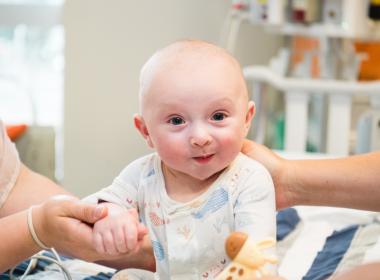
Service/Program
Hemostasis & Thrombosis Program Connecticut Children’s Hemostasis & Thrombosis Program provides compassionate care to children and adults with bleeding and clotting disorders. We treat the whole person and their family through comprehensive care coordination of all the medical and psychosocial aspects of Eating Disorder Clinical Pathway Eating disorders are increasingly prevalent in pediatrics and represent a complex interaction between medical and psychiatric manifestations. The need for a standardized approach is critical, due to the high risk of the condition (eating disorders have the highest mortality of
Service/Program
Cardiac Magnetic Resonance Imaging Cardiac magnetic resonance imaging (MRI) is an important diagnostic tool in the care of pediatric and adult patients with congenital and acquired heart disease as well as patients with non-ischemic cardiomyopathy. Advantages include: Non-invasive evaluation of the heart’s anatomy Oncology Patient with Fever Clinical Pathway Cancer patients undergoing chemotherapy are at high risk of infection due to a multitude of factors including their underlying disease process, the presence of central lines, and chemotherapy induced neutropenia and immunosuppression. Infection is subsequently a major cause of