
Article
Honoring Women’s History Month with Kids Women’s History Month provides an opportunity to teach children about the tremendous contributions women have made in the United States in a variety of fields, including art, science, medicine, math, education and other areas. At Connecticut Children’s, we honor Women’s History
Condition
Genu Varum (Bowlegs) and Genu Valgum (Knock-Knees) Genu varum (bowlegs) and genu valgum (knock-knees) are two common leg alignment conditions seen in growing children. Bowlegs (genu varum): The child stands with feet together, but their knees stay apart. Knock-knees (genu valgum): The child stands with knees together, but their Article
At the Forefront of Newborn Screening By Debbie Ellis, RN, BSN: By: Debbie Ellis, RN, BSN It’s a tiny prick on a newborn baby’s heel, but it can have a huge impact on the rest of their life. In 2011, the Centers for Disease Control and Prevention declared newborn screening one of the 10 greatest public health achievements of the 21st century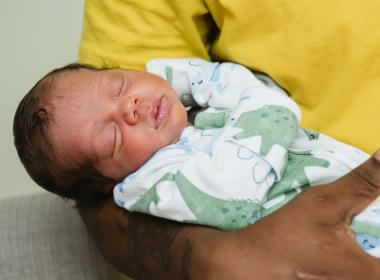
Article
A Team-Focused Strategy to Tackle Tough Topics By Lauren Dominique, MA: By: Lauren Dominique Team members of Connecticut Children’s Office for Community Child Health (the Office) recently embraced an opportunity to participate in a shared reading and discussion group to advance their understanding of the ongoing inequities faced by people of color
Article
5 Reasons You Might See a Fetal Cardiologist By Raymond P. Lorenzoni, III, MD: Yes. At your 20-week anatomy scan, your Ob/Gyn or maternal-fetal medicine (MFM) specialist will take detailed images of your baby. During this appointment you may learn your baby is at risk for a heart condition and that you need to see a fetal cardiologist. Connecticut Children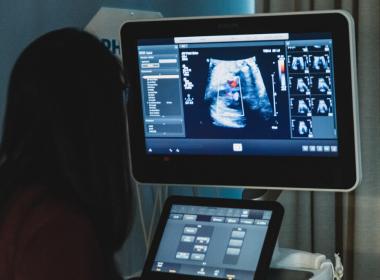
Specialty
Obesity & Weight Management At Connecticut Children’s, we believe in treating the whole child — not just the number on the scale. Our weight management services take a holistic, team-based approach to care that supports your child’s physical, emotional, and developmental health. When you come to us, you’ll Article
What Are the New COVID-19 Variants, and Do They Infect Kids More Easily? By Juan C. Salazar, MD, MPH, FAAP: In addition to all the news about the COVID-19 vaccine , you’ve probably been hearing a lot about new variants of COVID-19 . Connecticut Children’s Physician-in-Chief Juan Salazar, MD, MPH, shares what we know so far. What does it mean when there’s a new “variant” of COVID-19? A Condition
Double Outlet Right Ventricle (DORV) Usually, the aorta is attached to the left side of the heart, and another artery called the pulmonary artery is attached to the right. This allows blood to flow through the lungs to receive oxygen, and then for that “oxygen-rich” blood to flow through the rest of the body. But in Condition
Single Ventricle Defects The heart has two pumping chambers, called ventricles. When a baby is born with only one working ventricle, it’s called a single ventricle defect. This creates serious and complex problems for the heart – but with state-of-the-art care, kids born with these kinds of congenital Pediatric Cardio-Oncology Acute Cardiotoxicity Primary and Secondary Prevention Strategies Clinical Pathway Cardio-oncology is an emerging field. Childhood cancer survivors receive numerous cancer treatments that are cardiotoxic. Among the nearly 500,000 long-term childhood cancer survivors in the United States, more than half were treated with cardiotoxic cancer therapy, which results
REACH Resident Education in Advocacy and Community Health (REACH) is an opportunity available to residents of the University of Connecticut Pediatric Residency Program. Our Mission To foster the development of pediatricians who are committed to improving children’s health and well
Service/Program
Celiac Disease Program Connecticut Children’s Celiac Disease Program is staffed by pediatric gastroenterologists with extensive experience diagnosing and managing celiac disease. Additionally, our team includes dietitians who provide outstanding education and counseling to support children and their We Ask Because We Care "We Ask Because We Care" is an initiative designed to enhance our understanding of our patients' needs. By asking more detailed questions about race, ethnicity, and preferred language, we aim to provide personalized care tailored to each individual. Your responses are
Article
From Your Couch to a 5K: Tips to Get Active and Reduce Childhood Obesity By Melissa Santos, PhD: September marks the beginning of autumn, painting trees in bright reds and oranges with bright blue and sunny skies. That makes it the perfect time for families to break out their walking shoes, because it’s a scientific fact that beautiful scenery can boost feel-good hormones