
Article
Portion Sizes for Kids: How Much Food Is Healthy for My Child’s Age? By Jennifer Zarrilli, MS, RD: Some days, figuring out what to feed your child is hard enough. Figuring out how much can seem downright impossible. The recommended portions for a child depend on their age and even gender – and unfortunately, the serving size listed on grocery store labels doesn’t have much to Somatic Symptom and Related Disorders (SSRD) Clinical Pathway Somatic Symptom and Related Disorders (SSRD) is a clinical presentation where symptoms or impairment cannot be fully explained by an identifiable disease process given the current medical evidence. This pathway seeks to evaluate and ultimately explain to patients and their
Status Epilepticus Clinical Pathway Status epilepticus is a relatively common medical presentation, with 18-41 per 100,000 children presenting to emergency rooms each year. The American Epilepsy Society made recommendations in 2016 for treatment of prolonged seizures, which includes level A evidence of
Suspected Neurosurgical Shunt Infection Clinical Pathway Ventricular-peritoneal shunt placement is a common neurosurgical procedure. Ventricular-peritoneal shunt infection is a known risk in children with this hardware. Early recognition and treatment is essential to prevent further morbidity, and it also leads to decreased medical
Article
Partnering With You: How the Fetal Care Center Works With Referring MFMs By Andrew Healy, MD: At Connecticut Children’s Fetal Care Center, we’re here to support both families and the trusted providers who guide them. Fetal care specialist Andrew Healy, MD, our medical director of Maternal-Fetal Medicine, explains.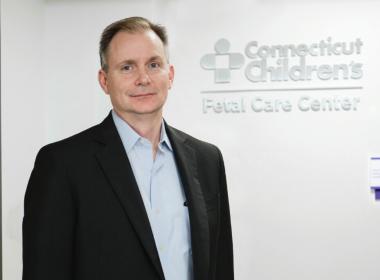
Service/Program
Sedation Services Connecticut Children’s Sedation Services has been named New England’s first Center of Excellence by the National Society of Pediatric Sedation (SPS). In addition, Connecticut Children’s is one of only 10 programs nationally to receive the distinction. As a Center of Excellence Specialty
Sleep Center When your child is experiencing sleep issues, turn to the team with decades of experience diagnosing and treating pediatric sleep disorders. The Sleep Center is accredited by the American Academy of Sleep Medicine , and we use polysomnography, a type of sleep study, to identify Advocacy Connecticut Children’s is often called upon by policy makers to act as an expert resource on health care issues that affect children. Too often, kids do not have a voice in the decisions that affect them and their families. Connecticut Children’s advocacy efforts are aimed at
Specialty
Social Work Caring for your child’s medical needs can be overwhelming, and the Social Work team at Connecticut Children’s is here to help. Our clinical social workers specialize in treating children and adolescents, from assessments and mental health diagnoses to emotional and practical Article
How to Help Your Child Use Crutches Safely By Nicholas Giampetruzzi, PT, MPT: When your child gets hurt and needs crutches, it can feel a little scary—for them and for you. The good news? It’s easy for kids to learn how to use crutches safely and comfortably. With a little practice and support, most kids get the hang of it quickly. Let’s dive into why
Specialty
Speech-Language Pathology At Connecticut Children’s, our pediatric speech-language pathologists specialize in assessing and treating children of all ages with a wide range of communication and swallowing conditions — from developmental, genetic and cognitive disorders to injuries and dysphagia. Our team Article
From the Sidelines: How Involved Should Parents Be in Sports? By Kelly Ann Maynes, PsyD: Whether your child is preparing for their first-ever game or for a high school championship, one thing is true—your support matters. As parents, the way we show up on the sidelines and in life shapes not just how our athletes play, but also how they grow. Connecticut Children’s