
Condition
Fetal Alloimmunization Fetal alloimmunization, previously referred to as isoimmunization, occurs when a pregnant person’s immune system produces antibodies against fetal red blood cell antigens which can attack and destroy the fetal red blood cells (hemolytic anemia). Background Every individual has Service/Program
Emergency Mental Health Services We are dedicated to providing the highest quality, compassionate, culturally inclusive, and comprehensive mental healthcare for all children. We focus on prevention, treatment, innovation, research, education, and advocacy to empower lifelong success. Service/Program
Critical Care Transport Connecticut Children’s Critical Care Transport Service include highly skilled nurses, respiratory therapists, and advanced practitioners and physicians with advanced training to care for critically ill infants, children, and teens. The Critical Care Transport Service provides: 24 Service/Program
Diabetes Program Diabetes is a medical condition that causes irregular blood sugar levels in the body. When blood sugar levels remain too high for too long, it can cause long-term health problems such as nerve damage, vision impairment, kidney damage, or heart disease. The pediatric Article
Q&A: Deep Brain Stimulation (DBS) for Pediatric Epilepsy & Primary Dystonia By David Hersh, MD: If your child’s epilepsy or dystonia isn’t responding to medication or other treatments, what comes next? Connecticut Children’s, in partnership with UConn Health, offers deep brain stimulation (DBS) as an option for pediatric patients — and for many families, a reason for hope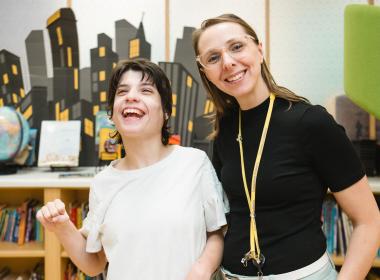
Service/Program
Center for Rare Bone Disorders Connecticut Children’s Center for Rare Bone Disorders specializes in treating and finding causes of rare bone diseases. The center is headed by globally recognized endocrinologist and researcher Emily Germain-Lee, MD, who is actively developing new therapies to treat these Service/Program
Kids’ Center for Bone Health The Kids’ Center for Bone Health provides comprehensive, multidisciplinary care to children of all ages who suffer from metabolic bone diseases, including primary and secondary causes of bone loss, such as: Effects of chronic illness Effects of medical therapies History of Suspected Neurosurgical Shunt Malfunction Clinical Pathway Ventriculoperitoneal (VP) shunt insertion remains the mainstay of treatment for hydrocephalus despite a high rate of complications. In the United States alone, more than 30,000 procedures to relieve hydrocephalus are performed every year. The 1-year failure rate for VP shunts had
Suspected Physical Abuse (SPA) Clinical Pathway In 2013 there were close to 70,000 substantiated cases of child abuse and neglect in the United States. Child maltreatment is a significant medical problem. Cases of suspected physical abuse frequently present to the emergency department. It has been noted that there is variation
Suspected Sexual Abuse Clinical Pathway According to the U.S. Department of Health and Human Services, in 2017, there were 674,000 substantiated cases of child maltreatment in the U.S., 8.6% of which were sexual abuse. In Connecticut, there were 8,442 victims of child maltreatment, and 401 of those cases involved
Article
Carpal Tunnel Syndrome in Kids: Symptoms, Causes, and When to See a Specialist By Sonia Chaudhry, MD, FAAOS: Sonia Chaudhry, MD, orthopedic surgeon, dives into what carpal tunnel syndrome (CTS) is, how it can affect kids, and when it’s time to see a pediatric orthopedic specialist.
Tethered Cord: Post-Operative Care Clinical Pathway Tethered cord occurs when the spinal cord is attached to tissues around the spine, most commonly at the base of the spine. The attached tissue limits the movement of the spinal cord within the spinal column and causes an abnormal stretching of the spinal cord and impairment of
Community Resources Connecticut Children’s board certified physicians and highly trained specialists provide advanced clinical and surgical care to children of all ages. However, the impact we make on healthcare in Connecticut reaches far beyond our walls and into communities across the region
Article
Caring for the Caregiver By Jacquelyn M. Rose, MPH: At Connecticut Children’s Childhood Prosperity Lab, we believe improving child, youth, and family health requires a comprehensive approach. Recently, I was reminded just how critical this approach is in our ongoing work. Childhood Prosperity Lab, a program of the Office for
Tonsillectomy and Adenoidectomy: Perioperative Care Clinical Pathway Tonsillectomy and adenoidectomy is a common procedure with greater than 500,000 performed annually in the United States. However, there is variability in peri-operative and post-operative care for these patients. This can lead to confusion and dissatisfaction for patients