For most of his childhood, Cole looked like he was right on track. The youngest of three kids, he hovered around the middle of the growth charts and kept up with his siblings and classmates. But when he hit his teens, something didn’t follow the usual pattern.
Between ages 13 and 15, Cole didn’t grow at all — not in height, not in weight. His weight stalled around 96 pounds and stayed there, no matter how much he ate.
“I thought it was really weird,” Cole says. “I used to be close to 100 pounds, then I dropped and just stayed there for like a year and a half or two years. Nothing changed it.”
At first, the assumption was that he was simply a late bloomer. But as his friends grew taller and stronger, Cole stayed the same size. Being noticeably smaller began to affect his confidence and mental health.
“He was very aware of it,” his mom says. “It wasn’t just physical — it really affected how he felt about himself.”
Pain That Started to Interrupt Daily Life
Then, in the summer of 2024, something else appeared.
Cole began having severe stomach cramps — sometimes three times a day. The pain would hit suddenly and stop him in his tracks.
“I would literally lurch over in pain and just wait for it to pass,” he says. “It happened in class. It happened at track practice.”
At school, he tried to push through, not wanting to miss class. During workouts, he’d stop and wait it out, hoping water or different foods might help. Nothing did.
Earlier stomach issues had been easy to explain away — anxiety, diet, stress. But combined with years of stalled growth, the picture was starting to look different.
A GI Visit That Brought Answers
After his pediatrician recommended further evaluation, Cole was referred to gastroenterology. An appointment opened quickly with Panamdeep Kaur, MD, pediatric gastroenterologist, with help from the automated waitlist in MyChart.
From the start, Dr. Kaur focused on Cole’s growth history as much as his symptoms.
“When a child isn’t growing well or has delayed development during teenage years, that’s never normal,” says Dr. Kaur. “Even if gastrointestinal symptoms seem mild or come and go, growth failure is a major signal that something deeper may be going on.”
Blood work and stool testing pointed toward inflammation consistent with Crohn’s disease.
“Crohn’s can sometimes hide in plain sight,” Dr. Kaur explains. “The inflammation may be affecting the body long before symptoms become severe.”
Our goal is to control inflammation as early as possible. That’s how we protect growth, development, and quality of life and prevent complications from Crohn’s disease.
Panamdeep Kaur, MD, Pediatric Gastroenterologist,
Connecticut Children's
What Is Crohn’s Disease?
Crohn’s disease is a chronic (lifelong) condition that causes swelling in the digestive tract. It happens when the immune system attacks the intestines by mistake.
For kids and teens, that inflammation doesn’t just cause stomach pain or bowel problems. It can prevent the body from absorbing nutrients from food — even when a child is eating normally.
“If the gut is inflamed, the body can’t get what it needs to grow,” Dr. Kaur says. “And when that happens, growth can slow or stop.”
Crohn’s disease can’t be cured, but treatment can reduce inflammation, allowing kids to feel better and grow again.
A Clear Diagnosis — and Relief
To confirm the diagnosis, Cole underwent an endoscopy and colonoscopy.
“So fun,” he says with a laugh. “But it gave us an answer.”
The experience at Connecticut Children’s felt reassuring, his mom says — from the Child Life specialists who explained each step to the care team that made sure he felt supported.
In October 2024, the diagnosis was confirmed: Crohn’s disease.
“For me, it was actually a relief,” Cole says. “I was excited to finally have a definite conclusion. There was a reason this was happening — and there was a treatment.”
“For me, [getting the Crohn's diagnosis] was actually a relief. I was excited to finally have a definite conclusion. There was a reason this was happening — and there was a treatment.
Cole, Crohn's Disease Warrior ,
Connecticut Children's Patient
Treating the Root Cause
Cole started Infliximab, a biologic medication considered the most common and recommended medication for treating Crohn’s disease of Cole’s severity, in November 2024.
“Our goal is to control inflammation as early as possible,” says Dr. Kaur. “That’s how we protect growth, development, and quality of life and prevent complications from Crohn’s disease.”
At the same time, Cole was also working with pediatric endocrinologist Karen Loechner, MD, PhD for short stature and delayed development.
“When Cole came to us, the family wanted to know, ‘What can we do?’” says Dr. Loechner. “He hadn’t gained weight in almost two years, and when weight doesn’t increase, height eventually suffers.”
While growth hormone issues are sometimes considered in teens with delayed growth, Crohn’s disease changes the equation.
“Although Cole was eating, his body was not getting what it needed. As a result, he was not growing and not developing in his teenage years. He also had low growth factors that made us question if he was deficient in growth hormone. However, there are challenges with the safety of using growth hormone in the setting of Crohn’s disease.”
The plan was to treat the inflammation first — and see what Cole’s body could do once it had the chance.
The CAMEO study is investigating why some children with Crohn’s disease respond well to anti-TNF therapy and others do not. Anti-TNF therapy is a medicine that calms down an overactive immune system. It blocks a protein called TNF that causes swelling in the body, helping the intestines heal and feel better. The hope is that the study will help improve current therapies and hopefully design newer ones.
“Every patient responds differently,” says Dr. Hyams. “With help from this study, we aim to be more precise and more effective in how we treat Crohn’s disease.”
Cole was all in.
“I really like biology,” he says. “I took AP Bio — my favorite class ever. I’m interested in immunology, and finding out I had an autoimmune disease made me want to understand it even more.”
For a full year, Cole participated in the study, completing questionnaires and providing samples during his infusions.
“When patients are curious and engaged, it makes a real difference,” Dr. Hyams says. “Cole took ownership of his care.”
In a little over one year, Cole grew five inches. That kind of response tells us the body is doing exactly what it’s supposed to do.
Karen J. Loechner, MD, PhD,
Pediatric Endocrinologist
⭐We Want To Hear From You⭐
Did you have a great experience at Connecticut Children's? Tell us about it. By leaving a review, you are helping many families who are in need of care.
By the time Cole returned to endocrinology six months later, the change was undeniable.
“He had already gained significant weight and was growing again,” says Dr. Loechner. “In a little over one year, he grew five inches. That kind of response tells us the body is doing exactly what it’s supposed to do.”
Once Cole began absorbing nutrients properly, everything accelerated.
“When weight came back, his body kicked back into gear,” Dr. Loechner explains. “Hormones normalized for growth factors and development progressed, and growth took off on its own. We didn’t need to pursue growth hormone — his body showed us he had all the ingredients for his growth spurt.”
Now 16, Cole has gained about 20 pounds and surged up the growth charts. He feels stronger, more confident, and fully immersed in teenage life.
He runs cross country. He pole vaults — an event that demands strength and explosiveness. After starting pole vault as a freshman with little muscle, he recently qualified for the state conference as a junior.
“It’s kind of crazy,” he says. “People see the growth spurt and say I’m lucky — but they don’t see the part where I was really short for a long time. You don’t always know the full story.”
He’s also looking ahead — touring colleges around New England and thinking about what comes next.
“I still have Crohn’s, and it’s a big part of my life,” he says. “But I don’t feel like I have to worry all the time anymore.”
Advice for Other Teens and Parents
For Cole, one lesson stands out.
“Don’t be afraid to ask questions,” he says. “I’ve asked Dr. Hyams things just because I was curious. It helps you understand what you’re dealing with.”
His mom hopes other families trust their instincts, especially during critical growth years.
“If something feels off — especially if a child isn’t growing — keep asking questions,” she says. “Push to get them seen. Those answers can change everything.”
For Cole, they did — giving him not just growth, but confidence, clarity, and a future that’s moving forward in big ways.
Meet Cole
Pole vaulting photo credits: Craig Rosenberg Photography: @shutterdude16
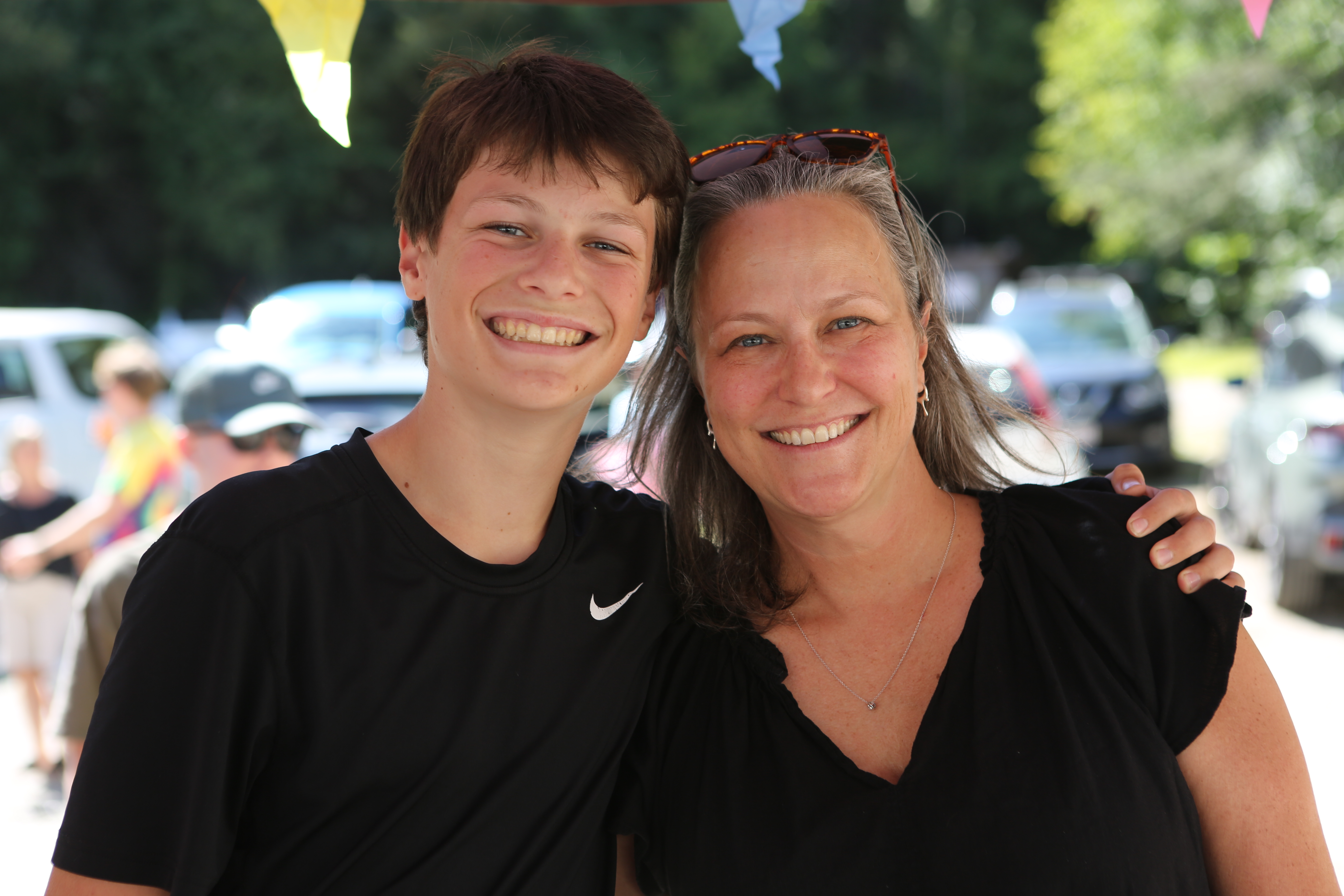
Cole with Mom, Christine, at Camp Oasis, a camp for children living with IBD.
Cole, enjoying life at Camp Oasis, a camp for children living with IBD.
Cole, at a pole vaulting championship. Photo credits: Craig Rosenberg
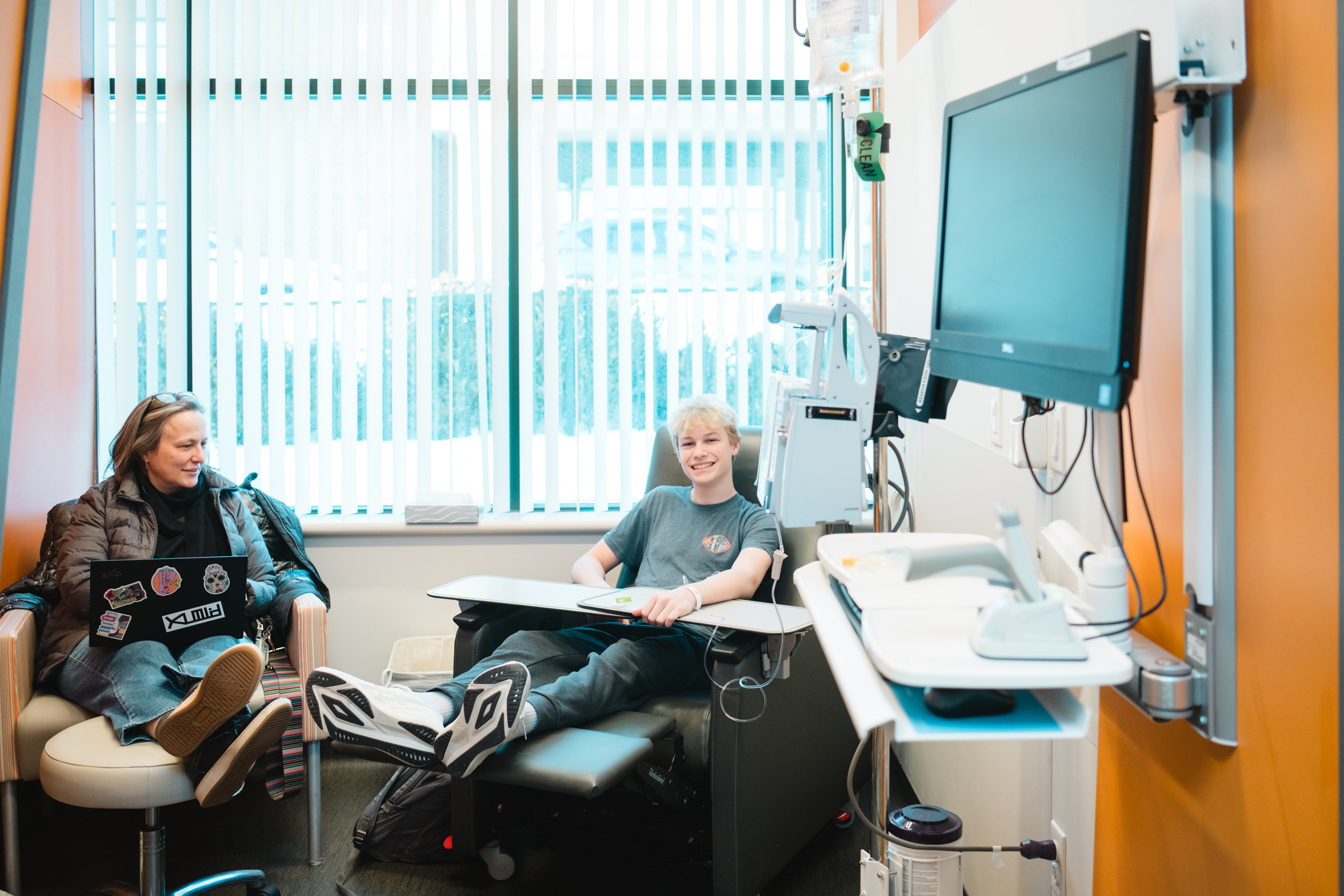
Cole and Mom at Connecticut Children's Infusion Center in Farmington, CT
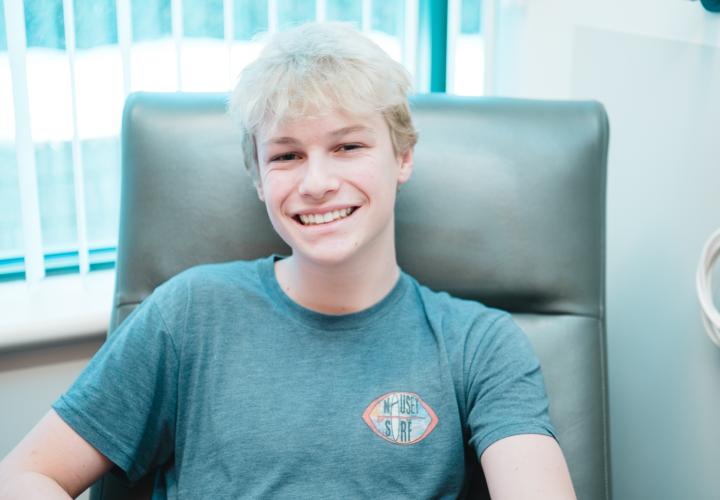
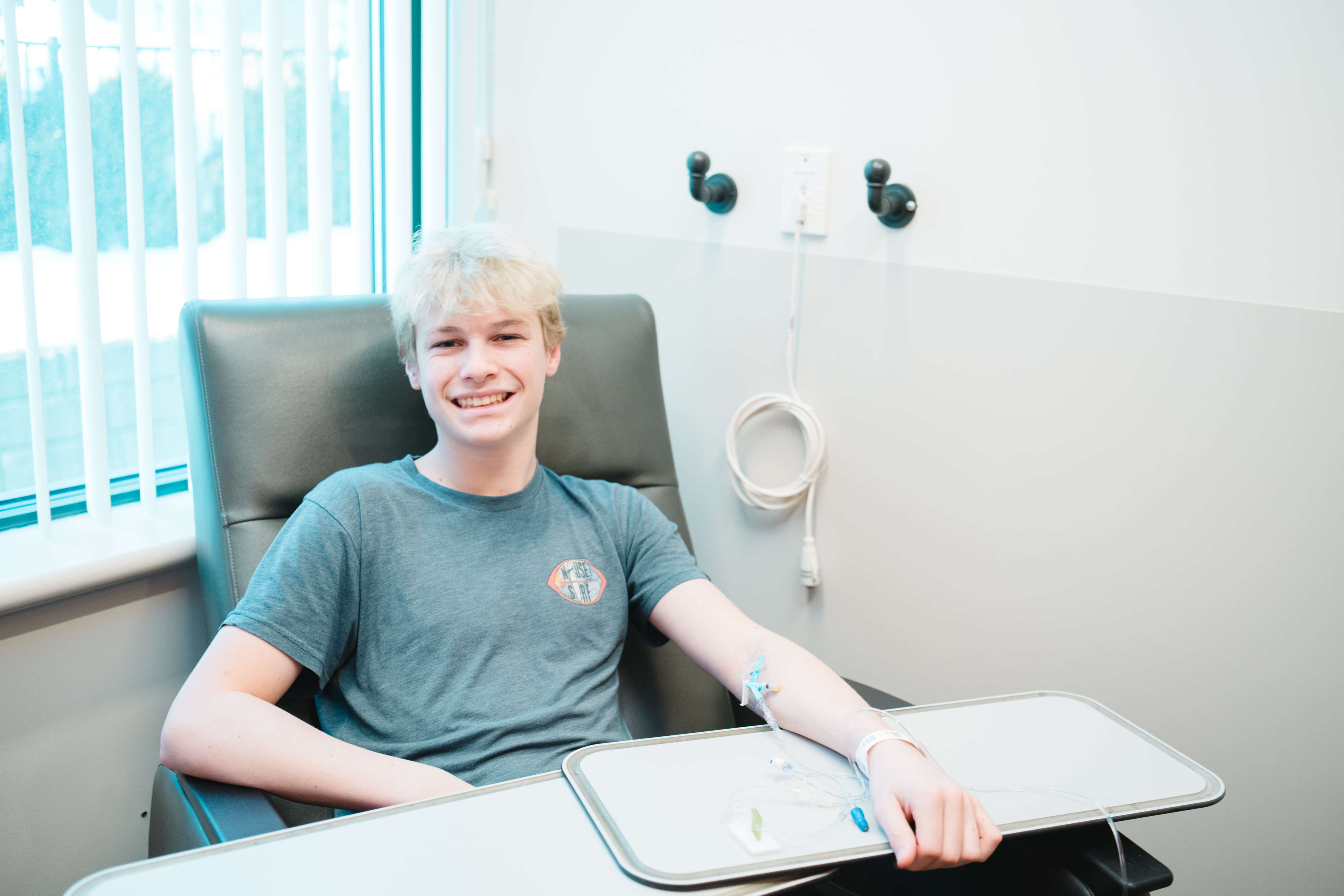
Cole at Connecticut Children's Infusion Center in Farmington, CT
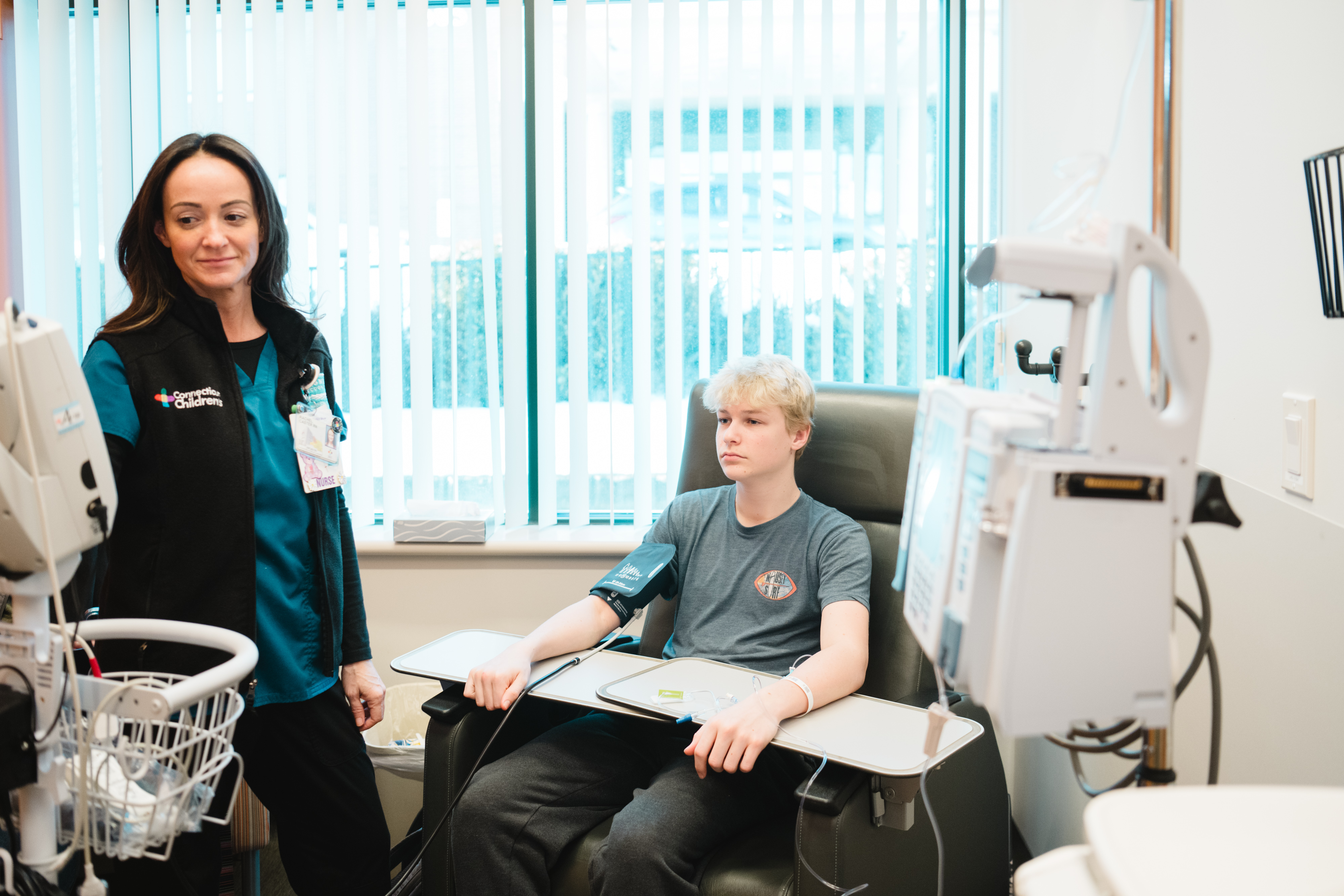
Cole with Infusion Center clinical staff member at Connecticut Children's in Farmington, CT
Want more articles like this from pediatric experts you trust?