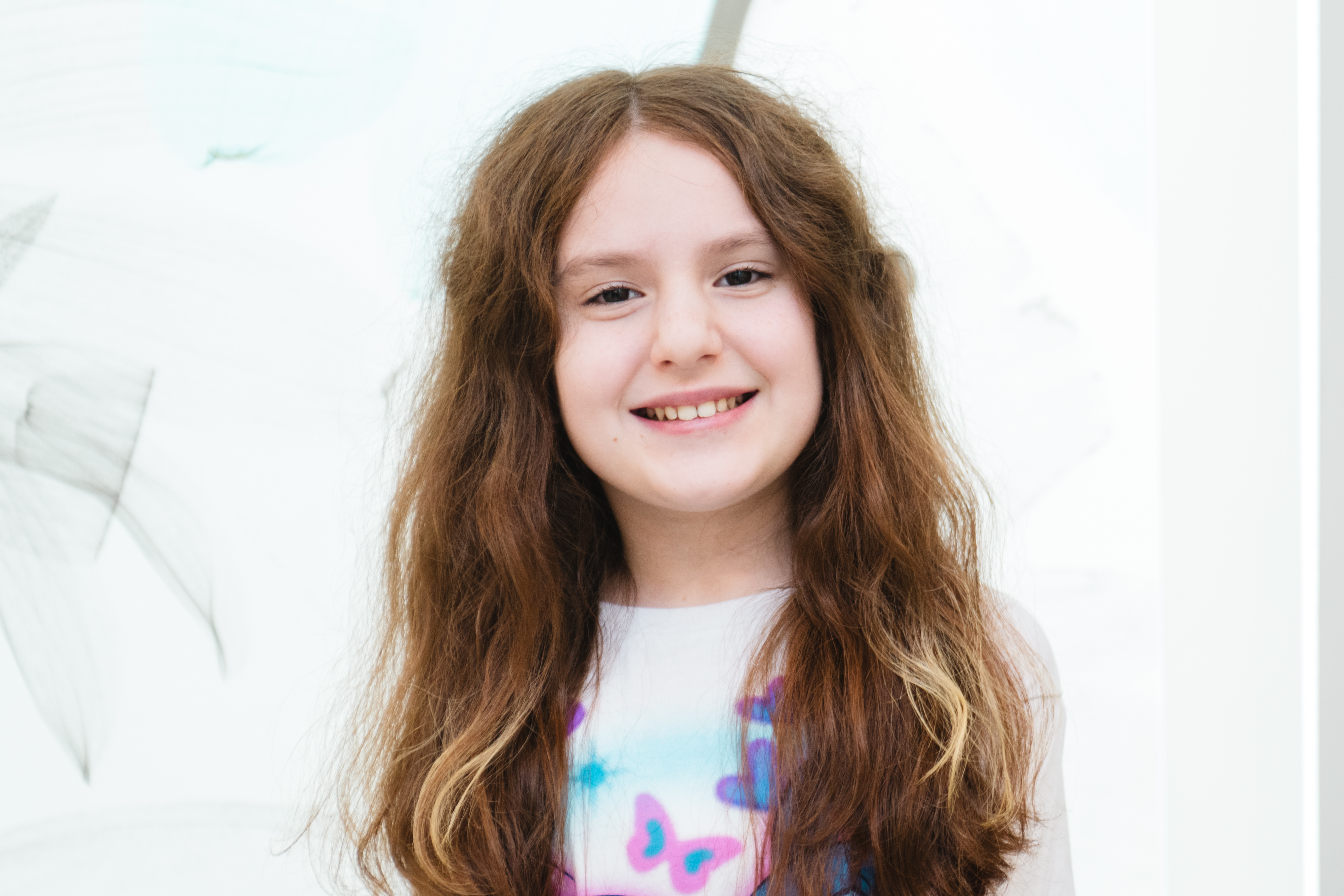
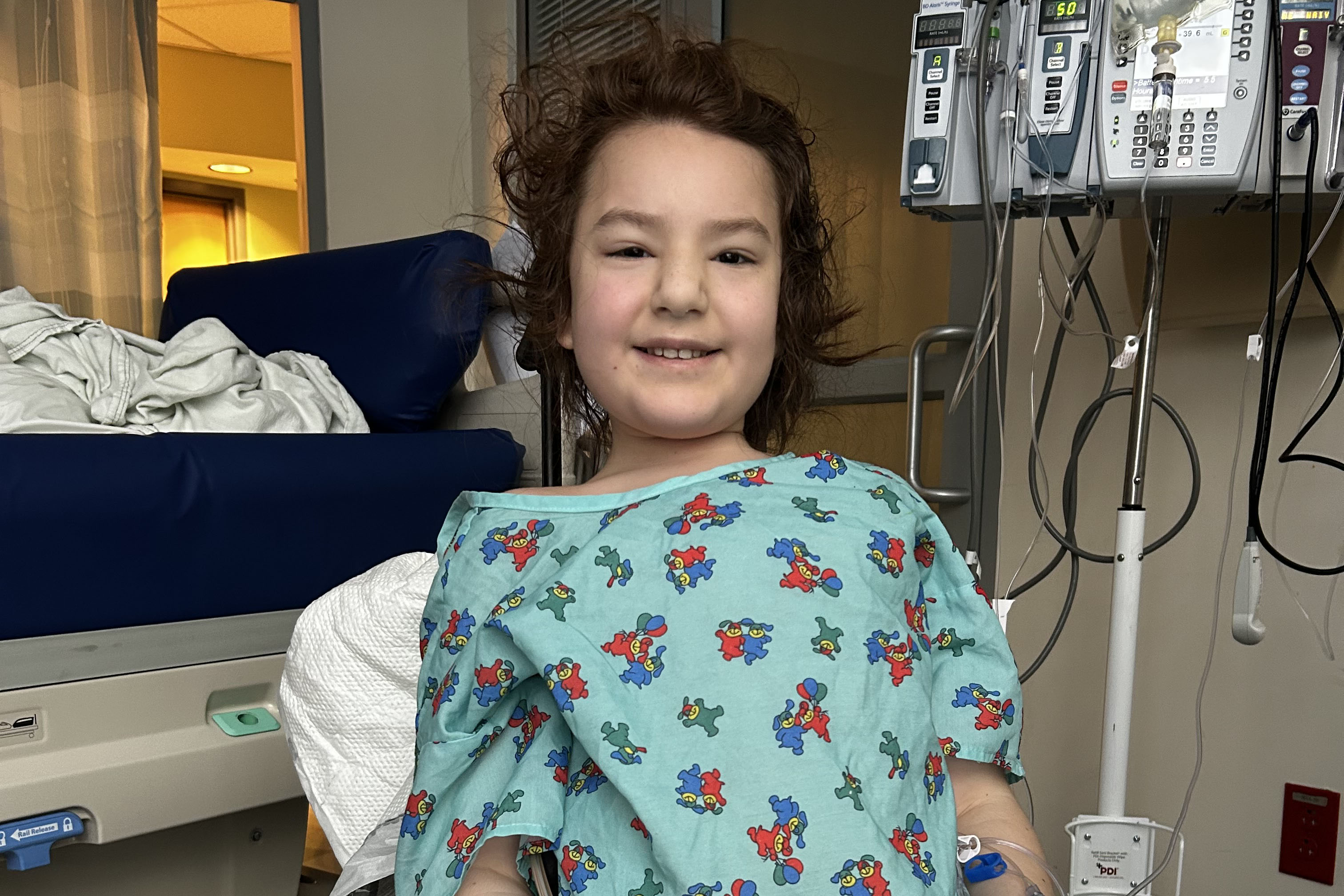
For Amber, that moment came just after her daughter Amelia’s first birthday.
“She just wasn’t acting like my other kids,” Amber recalls. “There were little things—how she was sleeping, how her body looked. I couldn’t shake the feeling that something wasn’t right.”
That instinct would lead her family to Connecticut Children’s, where Amelia was diagnosed with spinal muscular atrophy (SMA)—and where a multidisciplinary team would guide her through complex care for the next 13 years, including advanced pediatric spinal surgery.
Early Signs of SMA: Trusting a Parent’s Instinct
Amelia, the third of eight children, had been meeting early milestones—sitting, crawling, even taking supported steps around 11 months. But around her first birthday, Mom noticed subtle changes in Amelia:
Frequent constipation
Sleeping in unusual positions
Changes in muscle tone
A visit to their local emergency department raised concerns, but no real answers. The next day, her pediatrician identified a critical sign: loss of reflexes—and immediately referred Amelia to Connecticut Children’s Medical Center in Hartford.
A Clear Diagnosis at Connecticut Children’s
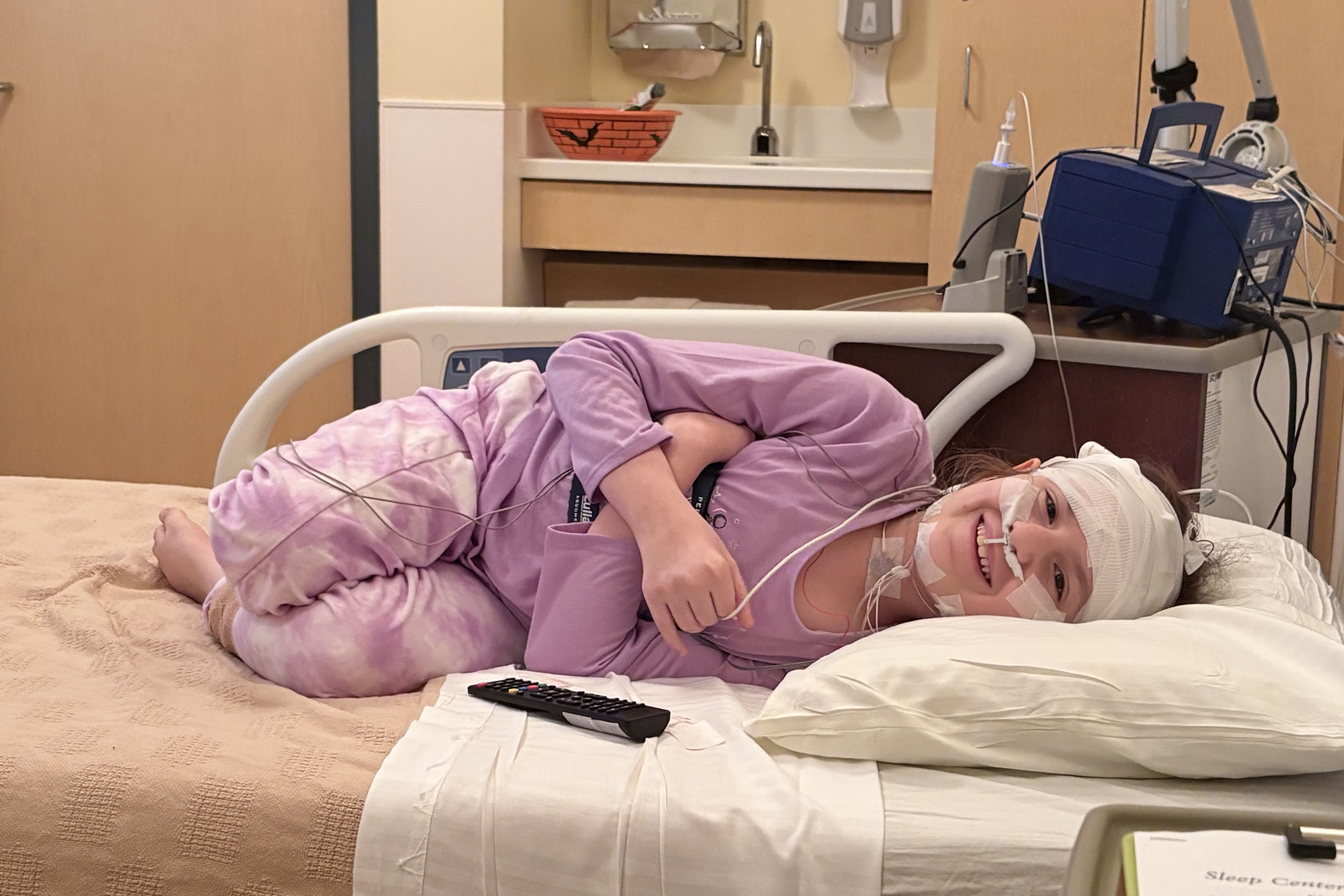
At Connecticut Children’s, Amelia met many pediatric specialists, who helped her through many tests, including neurological exams and bloodwork. Within a week, her family had answers: spinal muscular atrophy (SMA), condition that affects the nerves that control muscles, making it harder for kids to move and stay strong as they grow.
“That was the moment everything changed,” says Amber. “But we also felt relief knowing we were finally in the right place.”
Connecticut Children’s became Amelia’s home away from home—bringing together specialists experienced in diagnosing and treating rare pediatric neuromuscular conditions.
Managing SMA with a Multidisciplinary Team
Amelia’s early care focused on maximizing strength, stability, and development. Her care team included:
She also participated in a clinical trial for a drug that is now the first-ever FDA approved medication for SMA. The trial lasted five years—and now that the drug is FDA approved, Amelia’s still going strong with it!
“I knew in my heart Amelia wasn’t getting the placebo. We started to see changes over time,” Amber says. “She was stronger. She had more control. That gave us hope.”
When SMA Leads to Scoliosis
As Amelia grew, her condition led to neuromuscular scoliosis, a common complication of SMA that causes the spine to curve as muscles weaken.
“She started leaning more to one side,” Amber explains. “You could see her body working harder just to stay upright.”
Pediatric Orthopedic Care 100% Dedicated to Kids Matters
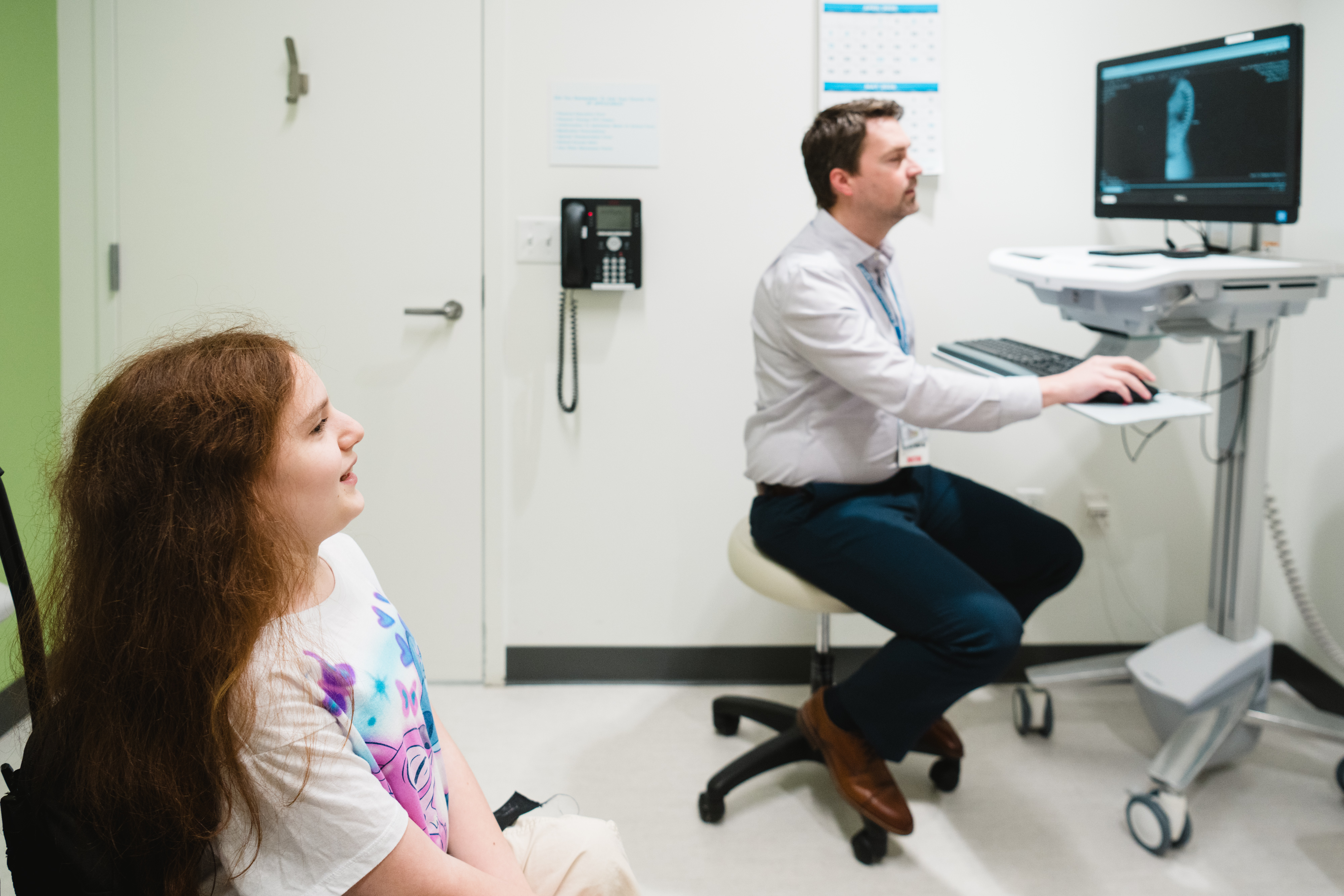
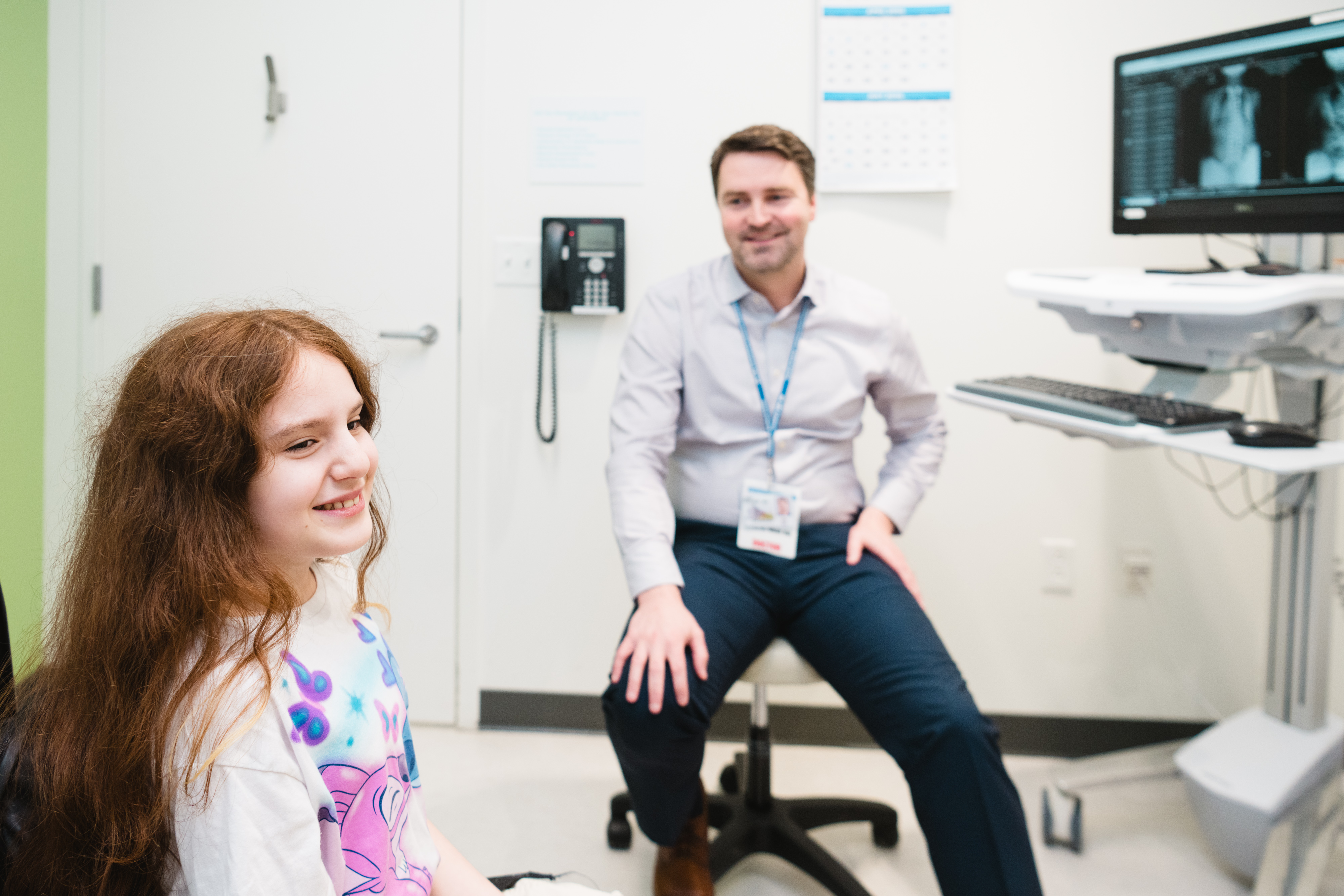
Amelia began long-term care with Mark Lee, MD, Division Head of Orthopedics, who closely monitored her growth and spinal curvature over time.
Unlike adult orthopedic care, pediatric specialists are trained to treat growing bones and complex neurological conditions like SMA, making sure care plans grow with the child.
Advanced Pediatric Spine Surgery at Connecticut Children’s
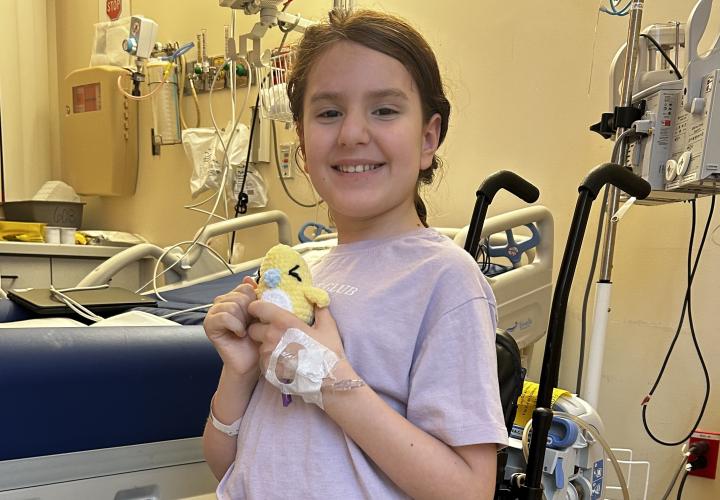
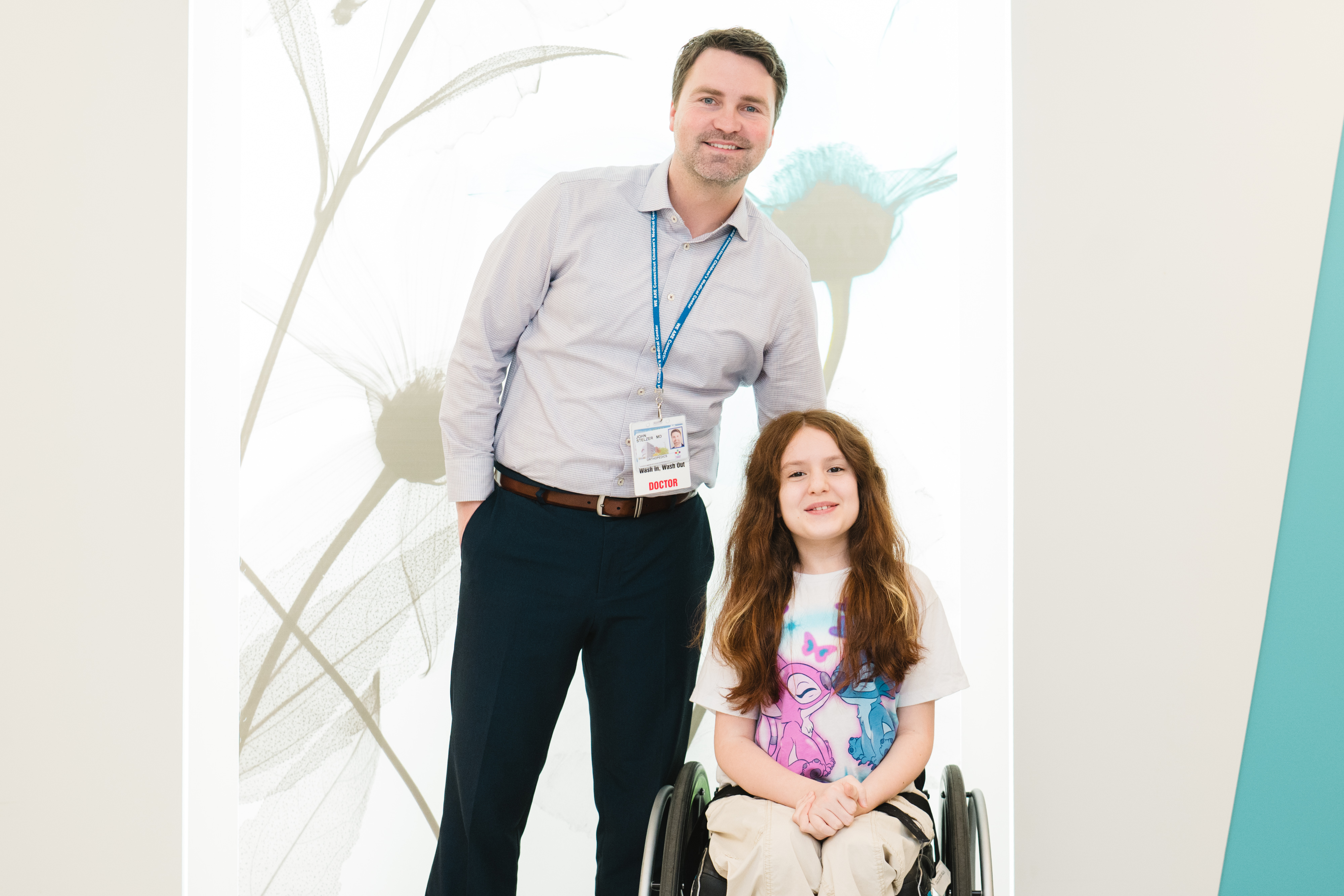
In February of 2026, Amelia underwent posterior spinal fusion surgery with John Stelzer, MD, pediatric orthopedic and spine surgeon at Connecticut Children’s. This type of surgery requires:
Careful coordination across multiple pediatric specialties at Connecticut Children’s
Experience managing medically complex kids
Neuromuscular scoliosis surgery is highly specialized. At Connecticut Children’s, we take a whole team approach to ensure each child receives the best care and outcomes possible.
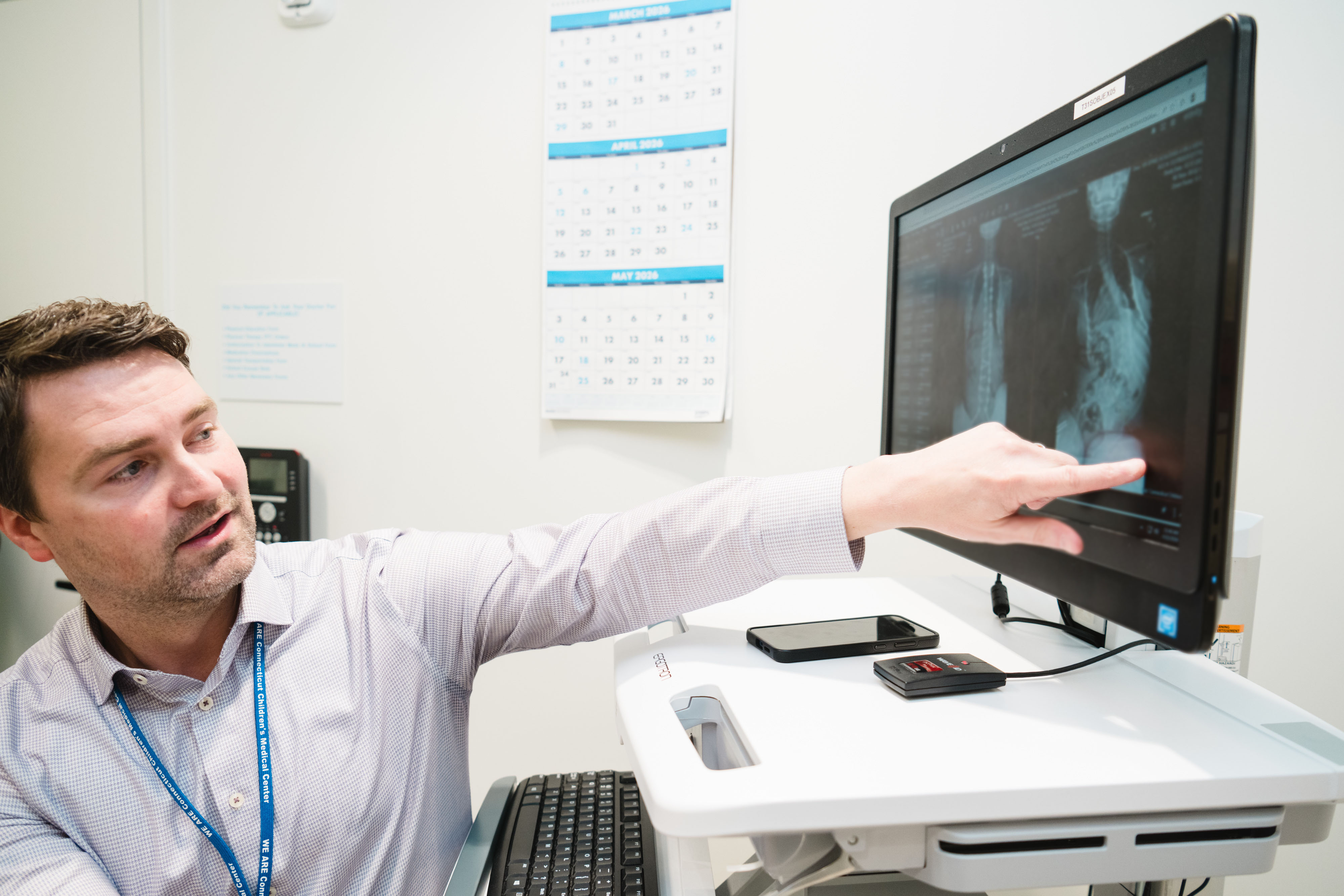
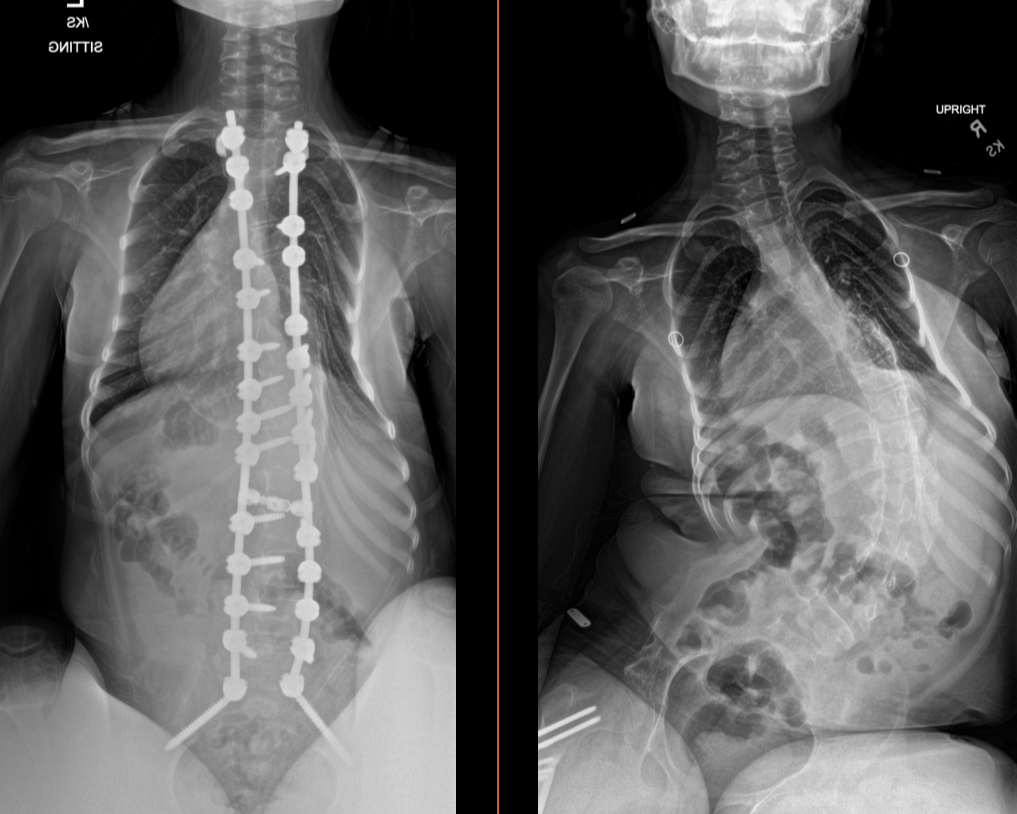
"Amelia's scoliosis had progressed to the point where it was affecting her overall alignment and compressing part of her chest. By straightening and stabilizing her spine, we were able to improve her posture, sitting balance, and create more space for her chest wall. We're extremely pleased with her correction and, most importantly, with how well she's doing today," said Dr. Stelzer.
Amelia's scoliosis had progressed to the point where it was affecting her overall alignment and compressing part of her chest. By straightening and stabilizing her spine, we were able to improve her posture, sitting balance, and create more space for her chest wall. We're extremely pleased with her correction and, most importantly, with how well she's doing today.
John Stelzer, MD, Pediatric Spine Surgeon,
Connecticut Children's
Before and After Spinal Surgery for Scoliosis: A Life-Changing Difference
Before surgery, Amelia struggled with:
Significant curving of the spine
Poor sitting balance
Increased physical strain
After surgery, the difference was immediate.
“She grew taller and was straighter right away,” Amber says. “Not just how she looked—but how she felt.”
Today, Amelia has:
Improved spinal alignment
Better balance and positioning
Greater comfort in daily life
Thriving. Happy. Confident.
Why Families Choose Connecticut Children’s for Orthopedic Care
Amelia’s journey highlights what sets Connecticut Children’s apart:
Expertise in pediatric orthopedics and spine surgery
Specialized care for rare, neuromuscular conditions like SMA
Collaboration across many specialties for medically complex children