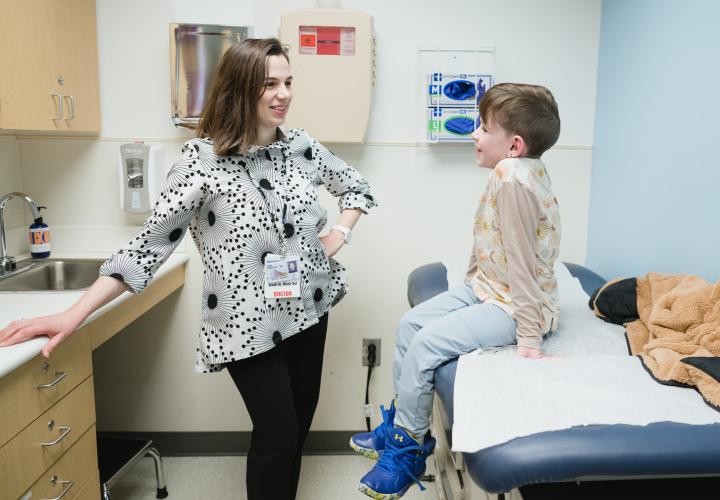
Before Your Visit to Connecticut Children's
To help your child’s care team get a complete picture, it’s helpful to:
• Bring any referrals, imaging, or test results from recent appointments
• Take pictures if the condition has changed over time (like a scar or skin lesion)
• Be ready to share details about when you first noticed the issue or how an injury happened
For issues like facial injuries, burns, or nasal trauma, timing can be important—so it’s best not to delay care.
During the Visit: Evaluation Comes First
Your child’s first visit with Connecticut Children's pediatric plastic surgery specialists will begin with a conversation.
Your care team may ask:
- When did this start?
- Has it changed over time?
- Is your child having any discomfort or functional concerns?
Then, we’ll exam your child. Depending on the reason for your visit, this may include:
- Evaluating a facial laceration, skin lesion, or scar
- Assessing a nasal injury after a fall or sports-related incident
- Examining a congenital (“at birth”) condition, such as ear shape concerns
The goal is to understand both how something looks and how it may functionally affect your child over time.
What Most Parents Are Surprised to Learn
Pediatric plastic surgery is focused on choosing the right treatment plan at the right time—not rushing into an operation.
- Most first visits do not involve surgery
- The visit is focused on evaluation and guidance
- You’ll have time to ask questions and understand next steps
At your child's visit, we'll explain:
- Many conditions can be monitored over time
- Some injuries heal well without surgical treatment
- Non-surgical options are often considered first
>>Related: Reasons your child might see a plastic surgeon