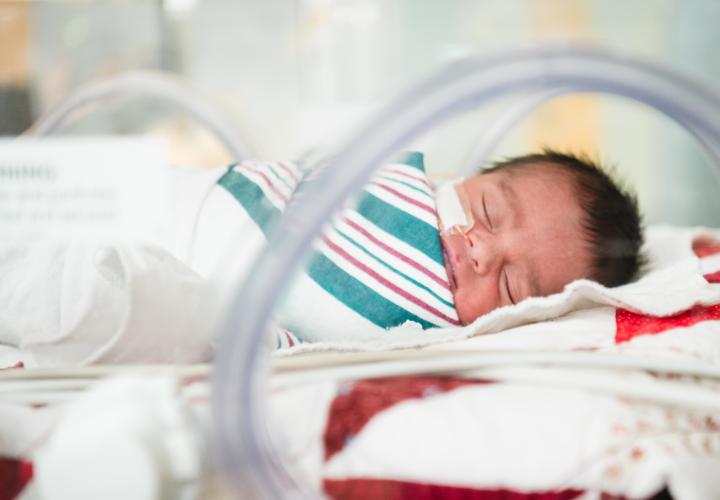
Some babies diagnosed with fetal renal failure during pregnancy need to start dialysis shortly after birth. In these early moments, care teams come together to support kidney function, manage fluid balance and stabilize the baby. While this scenario is uncommon, it requires highly specialized expertise—and the right tools—ready at the bedside.
Through Connecticut Children’s nephrology team and Fetal Care Center, advances in neonatal dialysis are helping expand what’s possible for newborns with serious kidney disease.
The transition from pregnancy to life outside the womb is complex for any newborn—but for babies with serious kidney conditions, it can be especially challenging.
Some infants are expected to need dialysis relatively soon after birth because of conditions identified during pregnancy, including severe kidney dysfunction. In these cases, planning ahead is key so care can begin as soon as the baby's care team decides it's medically appropriate.
These first days are not only about starting treatment—they’re about stabilizing a baby and creating a path forward.
Babies with severe kidney problems often may need dialysis either in the first few days after birth or several months later. This is where either hemodialysis or peritoneal dialysis treatments come into play.
Peritoneal dialysis is a treatment which uses the lining of the abdomen to help remove waste and extra fluid from the body. Peritoneal dialysis catheters require several weeks to heal prior to use.
For babies who need dialysis sooner, our Connecticut Children’s care teams have another way to provide support during that time. This is where CARPEDIEM can help with hemodialysis. The hemodialysis catheter can be used for dialysis soon after placement.
A New Option Designed for the Smallest Patients
Connecticut Children’s is now the only center in New England offering Cardio-Renal Pediatric Dialysis Emergency Machine (CARPEDIEM)—a dialysis system specifically designed for newborns.
CARPEDIEM can help support babies who need dialysis while they prepare for a longer-term care plan. It allows care teams to:
This level of control is especially important in newborns, where even small changes can have a significant impact.
>>Because of the generosity of the Robert R. Rosenheim Foundation, this life-saving equipment is now available at Connecticut Children’s. Discover how donors help Connecticut Children’s acquire the critical tools necessary for providing the best care to children.
For families, one of the most reassuring things is knowing there's a plan in place before their baby is born. Our teams work together before delivery so we're ready to provide the specialized care these babies may need.
Laura Lissner, APRN, NNP, BC Clinical Education Specialist,
Connecticut Children's
What This Means for Families and Referring Clinicians
For families preparing for a baby who may need dialysis as a newborn, knowing that a specialized team has multiple strategies in place can offer reassurance during an uncertain time.
For referring providers, access to advanced neonatal dialysis technology supports more comprehensive delivery planning and care coordination.
Part of a Coordinated Approach to Care
Babies who require dialysis are often identified before delivery, allowing for careful coordination between maternal-fetal medicine specialists, neonatologists and pediatric nephrologists.
At Connecticut Children’s, this collaboration ensures that:
Donations from individuals and organizations allow Connecticut Children’s to deliver the specialized care kids need and deserve. There are many ways to show your support.