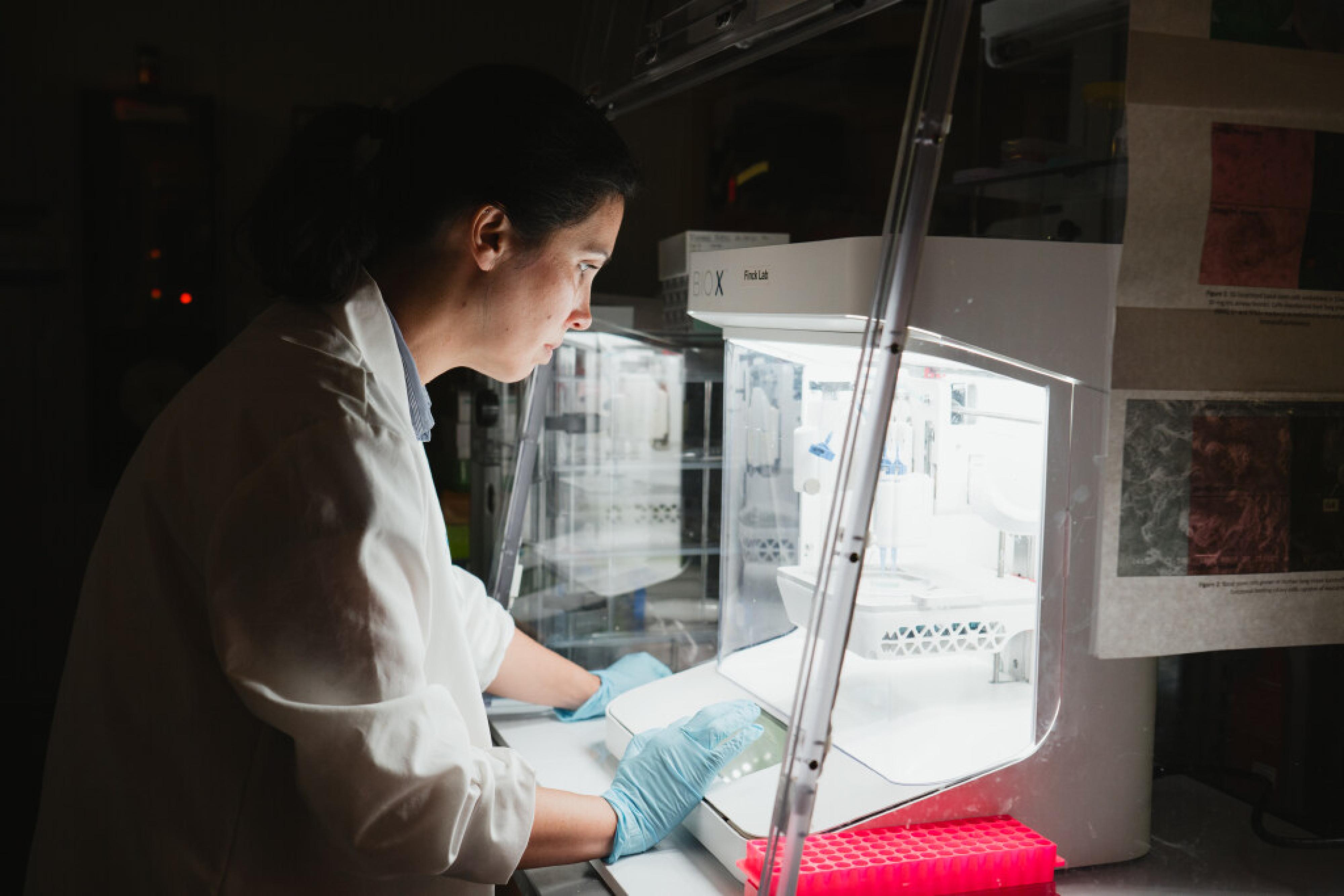
The Scientific Center for Fetal & Neonatal Regenerative Medicine is a pioneering consortium at the forefront of developing transformative therapies for fetal, neonatal, and pediatric patients. Focused on addressing congenital anomalies and complex health challenges, the Center utilizes cutting-edge regenerative medicine techniques, including tissue engineering, gene therapy, stem cell therapies, and 3D bioprinting. By combining these innovative approaches with state-of-the-art molecular and cellular technologies, the Center aims to revolutionize the care and treatment of young patients, offering new hope for improved outcomes.

Anchored by investigators Christine Finck, MD, Timothy Crombleholme, MD, Courtney Rowe, MD, Hala Saneh, MD, and Sanjukta Majumder, PhD, the Center is a multidisciplinary hub bringing together expertise in fetal gene therapy, esophageal and lung diseases, urology, and tissue scaffolding. This collaborative research environment is paving the way for novel treatment development and groundbreaking solutions in pediatric care.

Research Focuses

Esophageal and Lung Health

Led by Dr. Christine Finck, our team is pioneering regenerative medicine solutions to transform care for children with esophageal and lung diseases. Current surgical interventions for congenital defects, caustic injuries, and esophageal cancer often leave patients with lifelong complications. They are developing tissue-engineered scaffolds seeded with a patient’s own cells to restore function, along with a patented 4-in-1 device that combines feeding, stricture detection, balloon dilation, aspiration, and drug delivery, reducing hospital stays, anesthesia exposure, and repeat surgeries. In parallel, they are using stem-cell-based bioinks and 3D bioprinting to create personalized, anatomically precise airways, with the long-term goal of generating functional lungs for transplant and disease modeling. Together, these innovations aim to help children eat, breathe, and thrive more effectively. These innovations may one day significantly improve the quality of life for pediatric patients by providing safer, more effective treatments for complex esophageal and lung conditions.  

Placental and Fetal Gene Therapy for Fetal Health

The Crombleholme Laboratory is pioneering placental gene therapy to address conditions like fetal growth restriction (FGR) and preeclampsia, which pose significant risks to both fetal and maternal development and survival. By focusing on placental health, the lab is developing targeted therapies to improve fetal growth and reduce complications associated with poor placental function. Placental gene therapy has the potential to revolutionize fetal care, offering new treatment options for pregnancies affected by severe placental insufficiency and addressing the second leading cause of perinatal morbidity and mortality.  In addition, in collaboration with Youngmok Lee, PhD, a pioneer in gene therapy in children with glycogen storage disease (GSD), the lab working on fetal gene therapy for the treatment of GSD.

Pediatric Surgery & Urology

The laboratory of Dr. Courtney Rowe focuses on improving postoperative outcomes for pediatric urologic patients. A primary focus of Dr. Rowe’s research is optimizing urethral healing using regenerative medicine techniques. Urethral surgery is performed for a number of conditions including hypospadias, the second most common congenital difference in boys, and urethral strictures suffered after blunt trauma in adults. Complications after surgery are high, in part due to poor understanding of urethral healing. The Rowe Lab seeks to improve outcomes using in vitro models that will ultimately translate into interventions that support urethral healing. The lab’s research spans multiple areas, including urethral healing, pain management, and reconstructive surgery for children with complex congenital conditions. These innovations reduce the need for invasive procedures, minimize complications, and significantly improve recovery times and quality of life for pediatric patients.

Respiratory Health for Premature Neonates

Premature infants often experience underdeveloped lungs, which lead to long-term respiratory complications. The Saneh Laboratory is working on patient-specific stem cell therapies and extracellular vesicle therapies to enhance lung development and improve respiratory health in premature neonates. This research promises to reduce long-term respiratory issues in premature infants, improving their health and quality of life.

Leadership

Dr. Timothy Crombleholme

Timothy M. Crombleholme, MD, FACS, FAAP, is Director of the Fetal Care Center at Connecticut Children’s and a Professor of Surgery in the Division of Pediatric and Thoracic Surgery. Dr Crombleholme’s clinical interests include open and fetoscopic surgery with a focus on congenital diaphragmatic hernia, myelomeningocele, twin-twin transfusion syndrome, and congenital pulmonary airway malformations among many others. Dr. Crombleholme has an active research laboratory focused on placental gene transfer to correct fetal growth restriction. In his free time, he enjoys reading and writing and time with his family.

Photo of Dr. Timothy Crombleholme
Photo of Joanne Walker

Joanne Walker

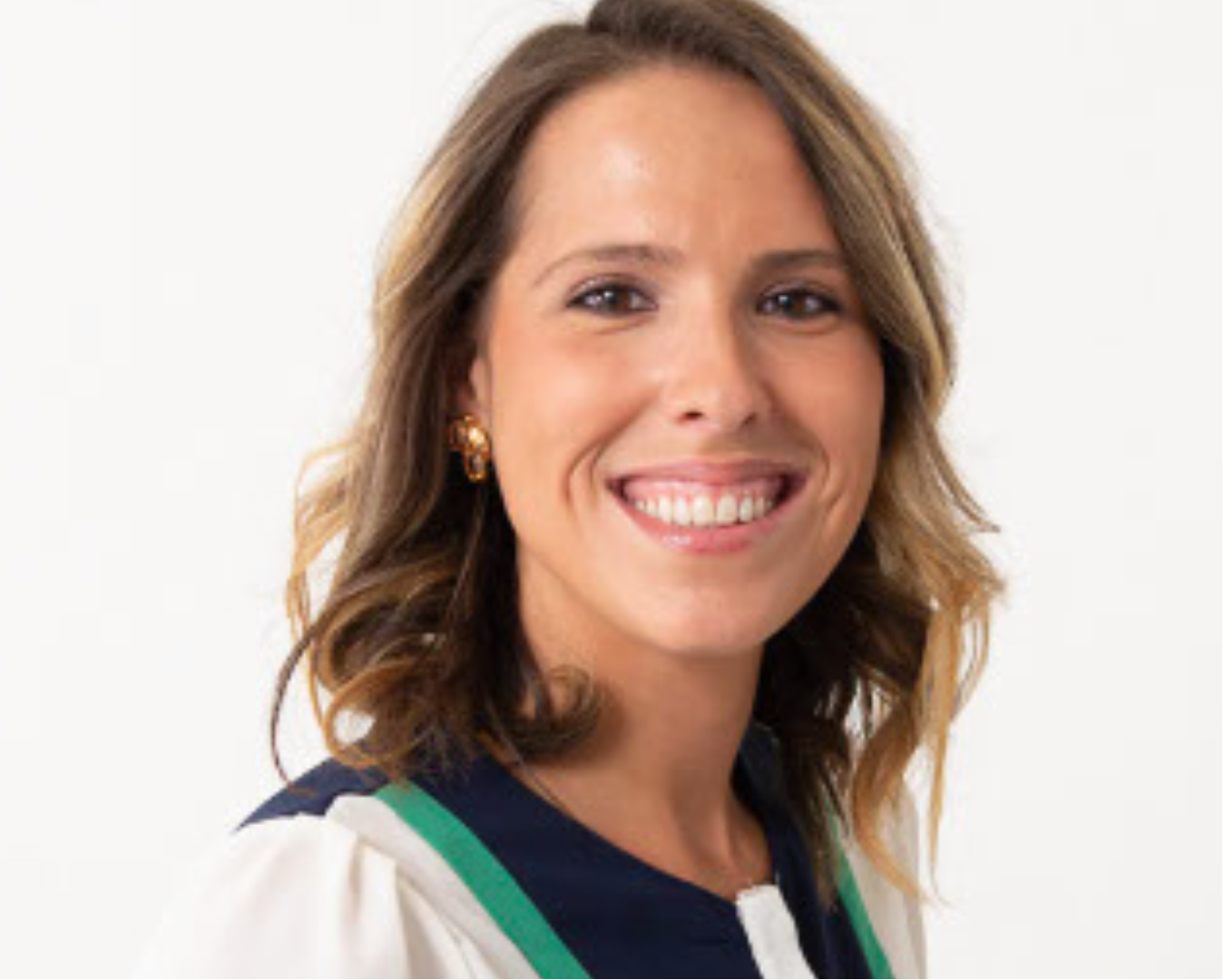
Research Associate and Laboratory Manager at the UConn School of Medicine where she conducts research on esophageal regeneration using tissue-engineered scaffolds with Dr. Christine Finck. Ms. Walker graduated from Quinnipiac with a bachelor’s degree in Biology and a master’s In Molecular Cell Biology. She has considerable knowledge of research protocols, principles and procedures, and possess knowledge on relevant scientific techniques.