Service/Program
Cardiac Magnetic Resonance Imaging Cardiac magnetic resonance imaging (MRI) is an important diagnostic tool in the care of pediatric and adult patients with congenital and acquired heart disease as well as patients with non-ischemic cardiomyopathy. Advantages include: Non-invasive evaluation of the heart’s anatomy Service/Program
Electrophysiology Program The Electrophysiology Laboratory provides state-of-the-art care for children and adults with congenital heart disease. The program is led by Irfan Warsy, MD, one of the most experienced pediatric electrophysiologists in Connecticut. Dr. Warsy is certified by the International Article
E-Bike Injuries Are Rising Fast—Here’s What Parents Need to Know By Kevin Borrup, DrPH, JD, MPA: This article was published in July 2025 and was updated on August 11, 2025 to remove outdated timeframe references. Over the past few years, electric bikes (e-bikes) have exploded in popularity among kids and teens. But with that rise has come a sharp increase in serious injuries
Article
Pediatric Celiac Disease: A Parent’s Guide to Food and Nutrition By Beth Chatfield, MS, RD: Learning your child has celiac disease can feel overwhelming at first. We think about how food choices, social situations and proper nutrition will come into play. But with the right tools, knowledge, and support, families can manage and enjoy a gluten-free lifestyle. Here’s a
Service/Program
Fetal Cardiology Connecticut Children’s Fetal Cardiology Program — part of our renowned Fetal Care Center — provides advanced diagnosis and care for the fetus with congenital heart disease or other fetal heart abnormalities. Service/Program
Inpatient Cardiology The inpatient cardiology team cares for patients in the Intensive Care Unit (ICU) and on the cardiac nursing floor at Connecticut Children’s. Our inpatient cardiologists work as part of a multidisciplinary team, including cardiologists, critical care doctors, cardiothoracic Article
Is Vaping Safe? No. Here’s Why. By Melanie Sue Collins, MD: The FDA recently ordered all Juul e-cigarette products off the shelves, a decision that has been in the works for two years following the rapid rise of underage vaping. Parents are concerned that their kids may look for other products or turn to actual cigarettes—both strong
Condition
Meconium Ileus Meconium is the first stool a newborn passes, and is very viscous, or thick. It forms while the fetus develops in utero and consists of intestinal epithelial cells, bile, succus entericus, mucus, lanugo, and amniotic fluid (1). When the meconium is unusually thick—either due to Condition
Vasa Previa The prenatal diagnosis of a vasa previa can be a terrifying event for patients and their families. At Connecticut Children’s, we help patients and their families navigate the different treatment options and optimize outcomes. Article
Help Your School-Aged Kid Plan for Next Year- Now By Bradley S. Jerson, PhD: Before we know it, school will be in session again. It's not too early to start thinking about ways to help your child make the most of the move to a new school year this fall. Below are some tips for talking to your kids AND their school teams about what may be most helpful for
Connecticut Children’s Care Network Connecticut Children’s Care Network is a primary care pediatrician-led organization that combines a nationally ranked children’s hospital, its subspecialists, and community physicians into one network that works to improve patient care for children around the region. As a team
Article
Celebrating 60 Years of Medicaid: 60 Reasons It Still Matters By Christian Petersen: For six decades, Medicaid has served as a critical lifeline for millions of children and families, offering access to essential health services, protecting vulnerable populations, and strengthening communities across the nation. To honor this milestone, we’ve compiled 60 reasons
Article
Beyond Twin-Twin Transfusion Syndrome: One Year Later By Timothy Crombleholme, MD: It’s a typical morning at home with 1-year-old identical twins. Ben, who is older by a few seconds, is pulling silly faces and giggling. Renny is crying and clinging to mom Kaelyn — who is doing her best to prepare snacks with one arm, since Renny is occupying the other. “It’s
Article
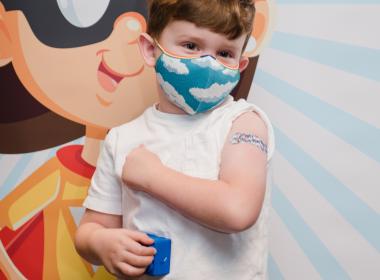
FAQs: The COVID-19 Vaccine for Kids Ages 5 to 11 By John R. Schreiber, MD, MPH: This post was last updated May 18, 2022 Children aged 5 to 11 can get the Pfizer-BioNTech’s COVID-19 vaccine because experts for the CDC unanimously approved its use. Connecticut Children’s infectious disease expert John R. Schreiber, MD, MPH , answers common questions about the