
Article
Minimally Invasive Craniosynostosis Surgery: A Game-Changer for Babies By Bethany Simonetti MSN, APRN, FNP-BC: Are you worried about your baby’s head shape and what it could mean? Flat spots, or plagiocephaly, tend to improve on their own, but if your doctor suspects craniosynostosis, which may require surgical repair, you naturally have lots of questions. Our pediatric neurosurgery team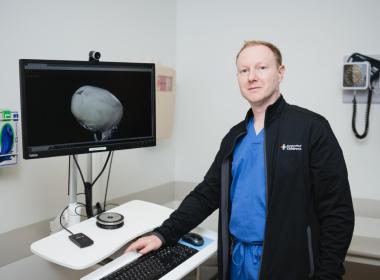
Venous Thromboembolism (VTE) Prevention Clinical Pathway Hospital acquired (HA) venous thromboembolism (VTE) is the second largest contributor to patient harm across the SPS (Solution for Patient Safety) network. HA VTE in high-risk patients may be preventable when using appropriate interventions, which include mechanical prophylaxis
Preseptal and Orbital Cellulitis Clinical Pathway Orbital cellulitis is a relatively uncommon condition but carries significant morbidity, including orbital abscess, vision loss, cavernous sinus thrombophlebitis, and intracranial abscess. Orbital abscess is a surgical emergency. Though they have distinctly different pathogenesis
Renal Injury Clinical Pathway The kidney is the most frequently injured urologic organ, with 70% to 80% being a consequence of blunt trauma. Although few urologic injuries are immediately life-threatening, they do account for some of the more frequent complications of trauma. In the late 1990s, the American
Article
How Do I Safely Clean My Child's Ears? By Rachelle Wareham, MD: This article was originally published in March 2025 and has been updated on June 23, 2025 with a video. Did you know there are right and “wrong” ways to clean your child’s ears? According to Rachelle Wareham, MD, pediatric otolaryngologist (ENT), it’s common to see kids with ear
Rhabdomyolysis Clinical Pathway Rhabdomyolysis is a syndrome characterized by the breakdown of skeletal muscle leading to the release of intracellular muscle constituents. The most common etiologies in children are viral illnesses, exercise, and trauma. Muscle pain and muscle weakness are the most common
Fetal & Neonatal Regenerative Medicine The Scientific Center for Fetal & Neonatal Regenerative Medicine is a pioneering consortium at the forefront of developing transformative therapies for fetal, neonatal, and pediatric patients. Focused on addressing congenital anomalies and complex health challenges, the Center
Sickle Cell Patient with Fever Clinical Pathway Patients with sickle cell disease (SCD) are at increased risk of severe bacterial infections, in large part due to reduced or absent splenic function. Repeated episodes of sickling and infarction lead to ‘autosplenectomy,’ often by age three years. Functionally asplenic patients
DIAMOND Award The Division of Clinical Services includes the following services: Audiology, Cardiopulmonary Lab, Care Coordination, Child Life, Clinical Nutrition, Neurodiagnostic Lab, Occupational Therapy, Pharmacy, Physical Therapy, Radiology, Respiratory, Sleep Lab, Social Work, Speech &
Sickle Cell: Management of Acute Pain Crisis Clinical Pathway Sickle Cell Disease (SCD) is the most common genetic disease in the United States. It is caused by a mutation in the hemoglobin beta chain in which glutamic acid is substituted with valine. The Centers for Disease Control and Prevention (2019) estimates that over 100,000
Skin and Soft Tissue Infection Clinical Pathway Over the years, the increase in resistance to typical antibiotics has changed the approach to the management of skin and soft tissue infections (SSTIs) in children. In 2014, the Infectious Disease Society of America (IDSA) updated their SSTIs guidelines. Based on these changes
Article
Portion Sizes for Kids: How Much Food Is Healthy for My Child’s Age? By Jennifer Zarrilli, MS, RD: Some days, figuring out what to feed your child is hard enough. Figuring out how much can seem downright impossible. The recommended portions for a child depend on their age and even gender – and unfortunately, the serving size listed on grocery store labels doesn’t have much to Somatic Symptom and Related Disorders (SSRD) Clinical Pathway Somatic Symptom and Related Disorders (SSRD) is a clinical presentation where symptoms or impairment cannot be fully explained by an identifiable disease process given the current medical evidence. This pathway seeks to evaluate and ultimately explain to patients and their