
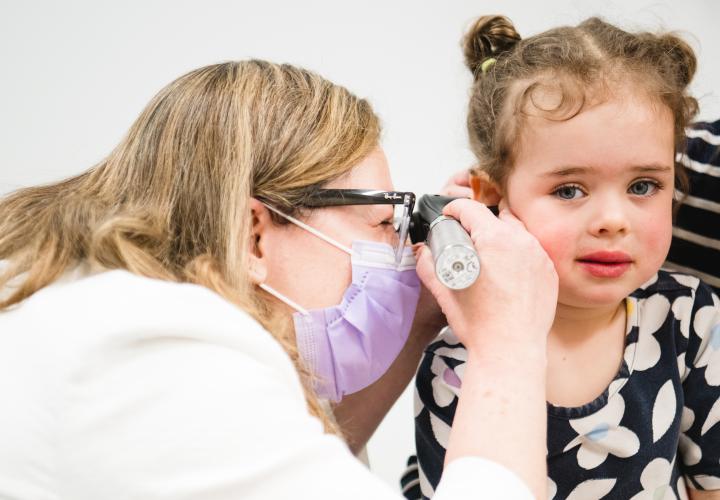
Ear infections are common in children
When your child has a lot of ear infections (3 or more in 6 months) or fluid that stays behind the eardrum for 3 months or more, ear tube surgery may help.
At Connecticut Children’s, our pediatric ENT specialists evaluate each child’s symptoms, hearing, and health history. We help you decide if ear tubes for kids are the right next step for your child.
What Is Ear Tube Surgery?
Ear tube surgery is a short procedure where an ENT surgeon places a tiny tube through your child’s eardrum. These tubes help to keep fluid out of the middle ear, preventing infection and helping hearing.
This procedure is also known as:
- Ear tube placement
- Tympanostomy tube placement
- Myringotomy with tubes
What to Expect During Ear Tube Surgery
During the procedure, an ENT surgeon performs the following steps:
- Makes a very small opening in the eardrum.
- Removes fluid from the middle ear if needed.
- Places the tube in the opening.
Children usually receive anesthesia for ear tube surgery through a mask. Almost all children go home the same day. The whole procedure usually takes less than ten minutes.
Before surgery, your child’s care team will explain how to prepare, including when to stop eating or drinking. They will also answer questions about anesthesia for ear tube surgery and what to expect on surgery day.
What to Expect After Ear Tube Surgery
Most children return to normal activities quickly (within one day) after ear tube placement. We will provide clear ear tube surgery recovery instructions, including how to care for your child’s ears and when to call the Connecticut Children’s pediatric ENT team.
Your child will also have follow-up visits so the doctor can ensure the tubes stay in place and work correctly.
>>Read: Ear Tube Surgery Recovery: What’s Normal, and When Should You Call the Doctor?
Why Choose Connecticut Children’s for Ear Tube Surgery?
Connecticut Children’s pediatric ENT specialists care for infants, children, and teens with a wide range of ear, nose, and throat conditions. Our team evaluates ear infections in children, persistent middle ear fluid, and hearing concerns. We help your family understand whether ear tube surgery is the best choice.
Throughout your child’s care journey, you can expect expert, compassionate care that focuses entirely on kids.
Frequently Asked Questions
Tympanostomy tubes (often just called ear tubes) are tiny cylinders placed directly in the eardrum. Ear tubes help keep fluid out of the middle ear. They also balance pressure across the ear drum – keeping the middle ear an air-filled space. This cuts down on repeat ear infections and improves hearing problems caused by trapped fluid.
You should consider ear tubes for children if your child gets ear infections often – typically more than 3 infections in 3-6 months. They are also helpful if fluid stays trapped behind the eardrum and affects your child's hearing or speech. They can also provide a different way to treat ear infections. When a child with ear tubes gets an ear infection, it is most often treated with ear drops.
Your Connecticut Children's ENT specialist will discuss if this is the best option and review any risks of ear tubes based on your child's age, symptoms, and health history.
Yes, most of the time. It is still possible to get an ear infection with ear tubes, but it is less likely. There is often no fever or pain with an ear infection with ear tubes – just some drainage. These ear infections are often treated with ear drops, so oral antibiotics are not needed. Some would say this is an easier way to treat ear infections.
Yes, children can still experience ear infections after ear tubes. However, instead of fluid getting trapped behind the eardrum, you may notice ear drainage after ear tubes.
We can treat many of these infections with medicated ear drops instead of oral medicine. If the drainage lasts or you have concerns, please contact your ENT.
They typically stay in place for about 1 year. When parents ask how long do ear tubes stay in, we explain that they usually fall out on their own as the eardrum heals. Sometimes they stay in longer and need to be removed by our ENT specialists.
Most likely, yes. Many children hear better once the fluid is no longer behind their eardrum. You might notice your child seems extra sensitive to sounds at first. That is often a sign of hearing improvement after ear tubes. It usually gets much better as your child adjusts.
Yes, our ENT specialists will set up follow-up visits to check that the tubes stay in place and work well. We also make sure the tubes fall out as expected. We may also do hearing tests to monitor your child's hearing over time.