
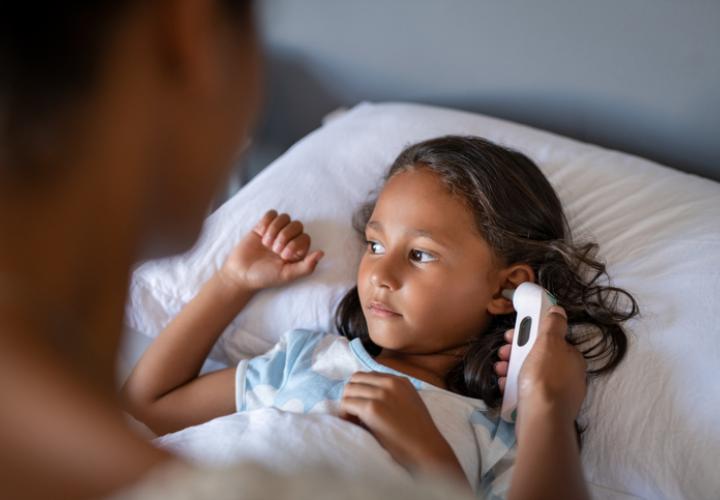
Yes. But fever alone does not prove an ear infection or mean your child needs medicine. One conversation I have a lot with parents is about how temperature, ear pain, and treatment connect, and when our ENT team can help.
How body temperature connects to ear conditions
Ear infections can cause a fever in babies, toddlers, and young children. But not every child with an ear problem gets a fever. A fever just means the immune system is fighting a virus or bacterial infection. A fever and ear infection can happen together, but fever by itself is not the full story.
I also see children with recurrent ear infections and use temperature as one clue, not the whole answer.
What temperature ranges mean for your child
An ear infection fever can be mild or high, but the number on the thermometer does not show how bad the infection is. Children react in different ways.
I tell parents that a low fever does not always mean mild illness, and a high fever does not always mean an emergency. When I evaluate a child, I’m interested in the fever, but I’m also interested in how your child is doing overall.
- Are they drinking enough fluids and staying hydrated?
- Are they alert, responsive, and acting like themselves?
- Are they having severe ear pain or ongoing fussiness?
- How many days has the fever lasted?
The only sure way to confirm an ear infection is to look at the eardrum with an otoscope.
If my child has a fever and an ear infection, do they need antibiotics?
Not always. A fever doesn’t automatically mean an ear infection needs to be treated with antibiotics.
Some ear infections can get better on their own. Depending on your child’s age, how severe the symptoms are and what the ear looks like during an exam, your pediatrician may recommend watching your child closely before starting an ear infection antibiotic.
If your doctor recommends watchful waiting, keep these steps in mind:
- Ask what symptom changes should lead to a follow-up call.
- Contact your doctor promptly if your child seems very tired or hard to wake, or if ear pain worsens.
- Finish the full course of any prescribed medicine, even if your child feels better early.
What if the fever goes away but the ear still hurts?
Fever is only one symptom. Ear pain, pressure or fluid can sometimes continue even as an infection begins to improve.
If symptoms are getting worse rather than better, your child develops new symptoms, or you’re concerned about how your child is acting, check in with your pediatrician.
When repeated illness in kids needs an ENT specialist
I check ear problems that happen often, are difficult to clear up because of antibiotic allergy or intolerance, or affect hearing and potentially speech development. It’s reassuring to know that many young children do get ear infections due to a combination of their developing immune system and eustachian tube anatomy. But you should see an ENT specialist if your child has:
• 3 or more infections in 6 months.
• 4 or more infections in 1 year.
• Fluid behind the eardrum for more than 3 months.
• Noticeable speech or hearing concerns.
Seeing a pediatric ENT specialist does not mean your child needs ear tubes. We look at infection patterns, hearing, and the safest next step.
Schedule a Pediatric ENT Appointment
Book an appointment online, in just a few clicks.
Frequently Asked Questions
Some children have swelling and fluid buildup without a whole-body immune response, so their temperature stays normal.
Body temperature often starts to drop within 24 to 48 hours after treatment or comfort care begins.
Teething can cause a mild fever and ear pulling, but it rarely causes severe pain or a high fever.